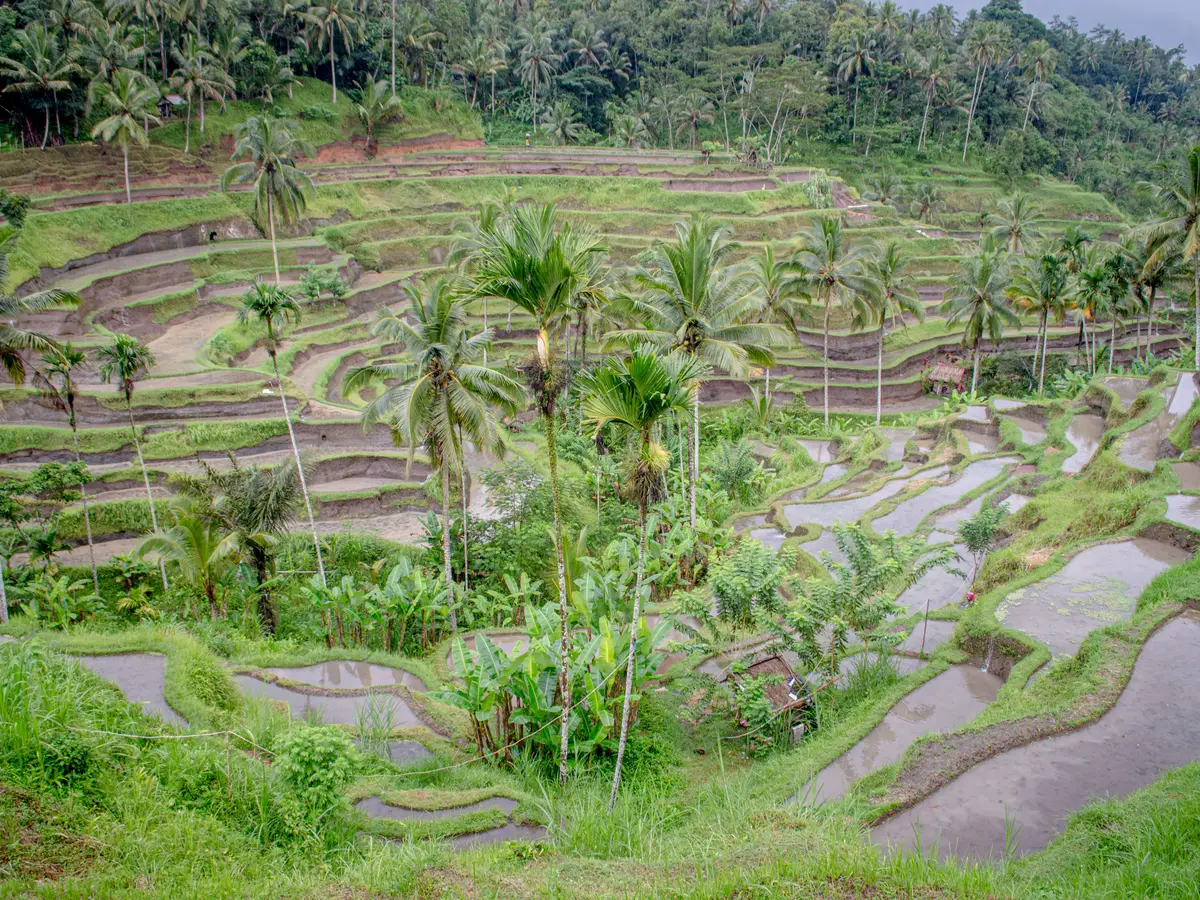
A terraced paddy valley north of Ubud, watered by a thousand-year-old system.
The one place where Bali's landscape and its thousand-year water system are the same thing, and it can be seen from the roadside with no walking at all.
- Time needed
- About 45 min at the road, longer if you walk down
- Opening hours
- The roadside viewpoints are open through the day; the best light is early.
- Admission
- Nothing to look from the public roadside. A donation or fee is asked at some of the paths down, by whoever keeps them.
- From the Benoa cruise port
- about 35 kmStraight line; the road is longer.
At a glance
- A valley of terraced paddy north of Ubud, seen from a strip of roadside above it
- Watered by subak, Bali's cooperative irrigation system, run by farmers' councils and their own water temples
- Subak is what UNESCO inscribed in 2012 as the Cultural Landscape of Bali Province — a working system, not a monument
- Tegalalang is not itself one of the five inscribed components
- Ceking is the local name of the hamlet at the heart of the valley, and the terrace is often called by it
- Water moves down the terraces through small canals and simple weirs, field by field in turn
- About 35.3 km from the berth in a straight line, on a slow road
About Tegalalang Rice Terrace
Tegalalang is a valley of terraced rice fields north of Ubud, and what people mean by the name is the view from a strip of road along the top of it. The terraces drop away below you in steps for most of a kilometre, each one a shelf of water or green or cut stubble depending on where that field is in its cycle.
It is worth knowing what you are looking at, because it is not scenery. Those steps exist to hold water and hand it on. Bali's rice has been irrigated for something like a thousand years by subak — a cooperative system in which the farmers who share a watercourse form their own council, divide the flow between them, and mark the sources and the divisions with their own water temples. Water comes down through small canals and simple weirs and is let onto each terrace in turn. The schedules also set when fields lie fallow together, which breaks the life cycle of pests. Nobody designed this from above; it is the accumulated agreement of the people whose fields are below you.
That system is what UNESCO inscribed in 2012, as the Cultural Landscape of Bali Province: the Subak System as a Manifestation of the Tri Hita Karana Philosophy. One correction belongs here: Tegalalang is not one of the five components of that listing. The five are the Catur Angga Batukaru landscape, Lake Batur, the Pakerisan river watershed landscape, Pura Taman Ayun and Pura Ulun Danu Batur. Tegalalang is the famous view; Jatiluwih, further west, is the inscribed terrace.
The hamlet at the heart of this valley is called Ceking, and the terrace is often named after it. Note that there is no OpenStreetMap feature carrying that name, which is why a map may put you a kilometre from where you mean to be.
Two practical things. The valley is a kilometre long, so no single point is honestly its position — the coordinate here is the roadside entrance. And you can see the whole thing without walking a step; going down into it means steep narrow paths and a hard climb back in the heat.
Visiting Tegalalang Rice Terrace
Good to know
Places near Tegalalang Rice Terrace
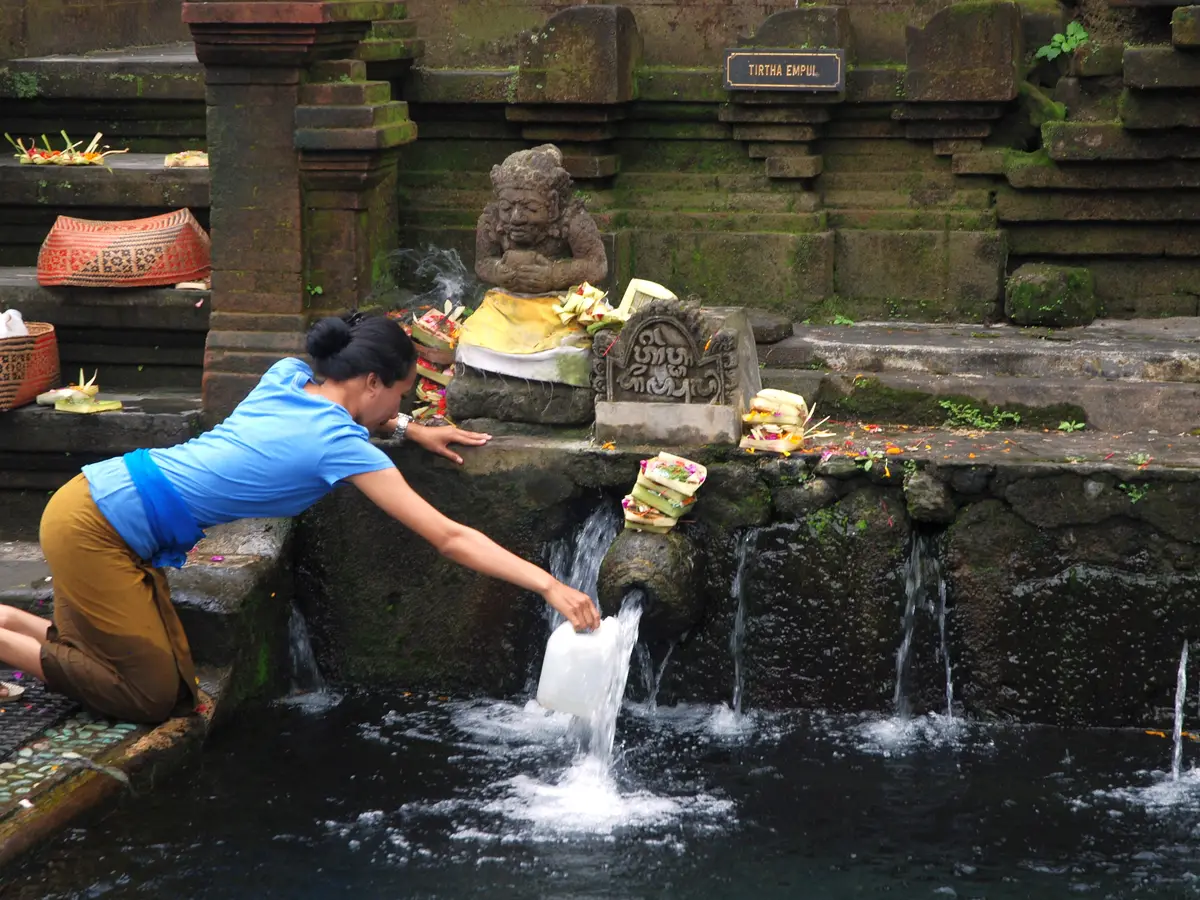 Pura Tirta Empulabout 5 km
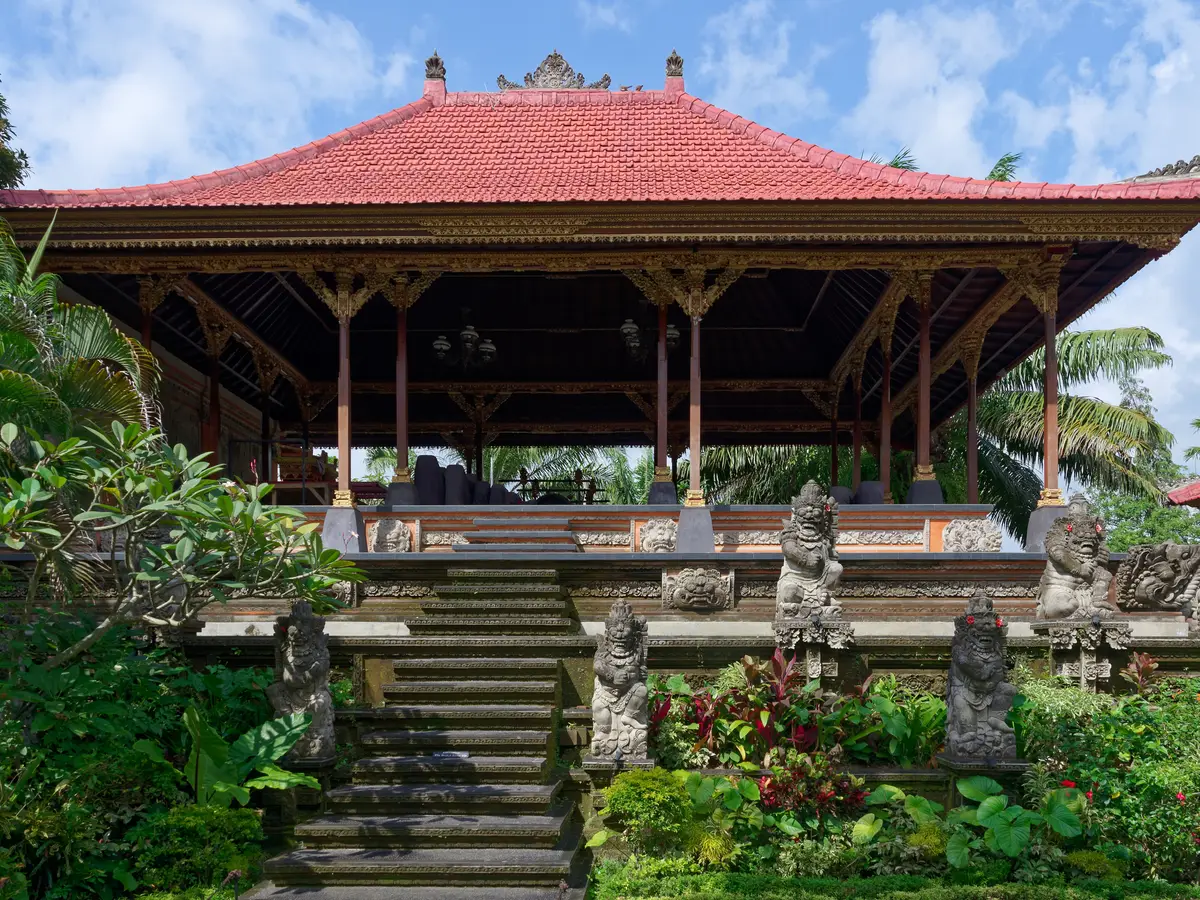 Ubud Royal Palaceabout 8 km
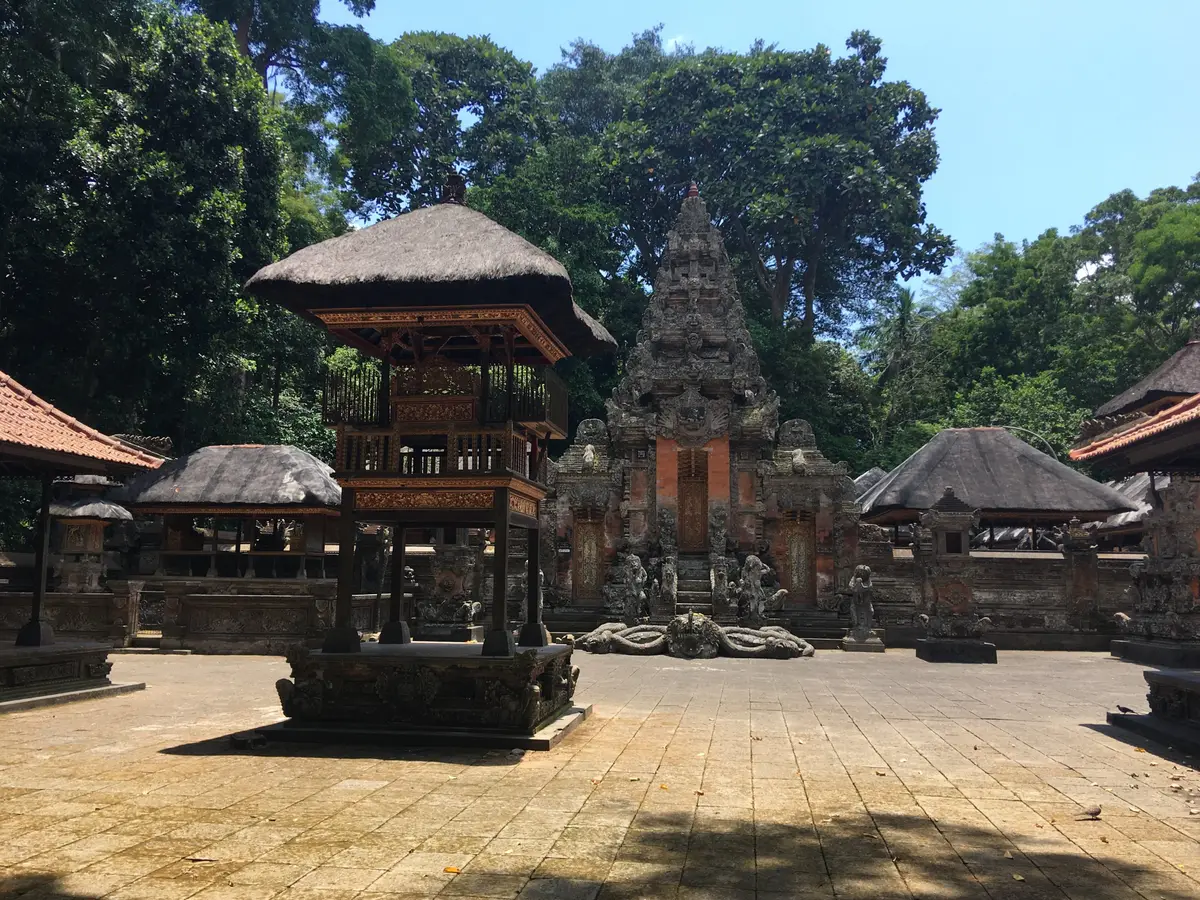 Sacred Monkey Forest Sanctuaryabout 10 km
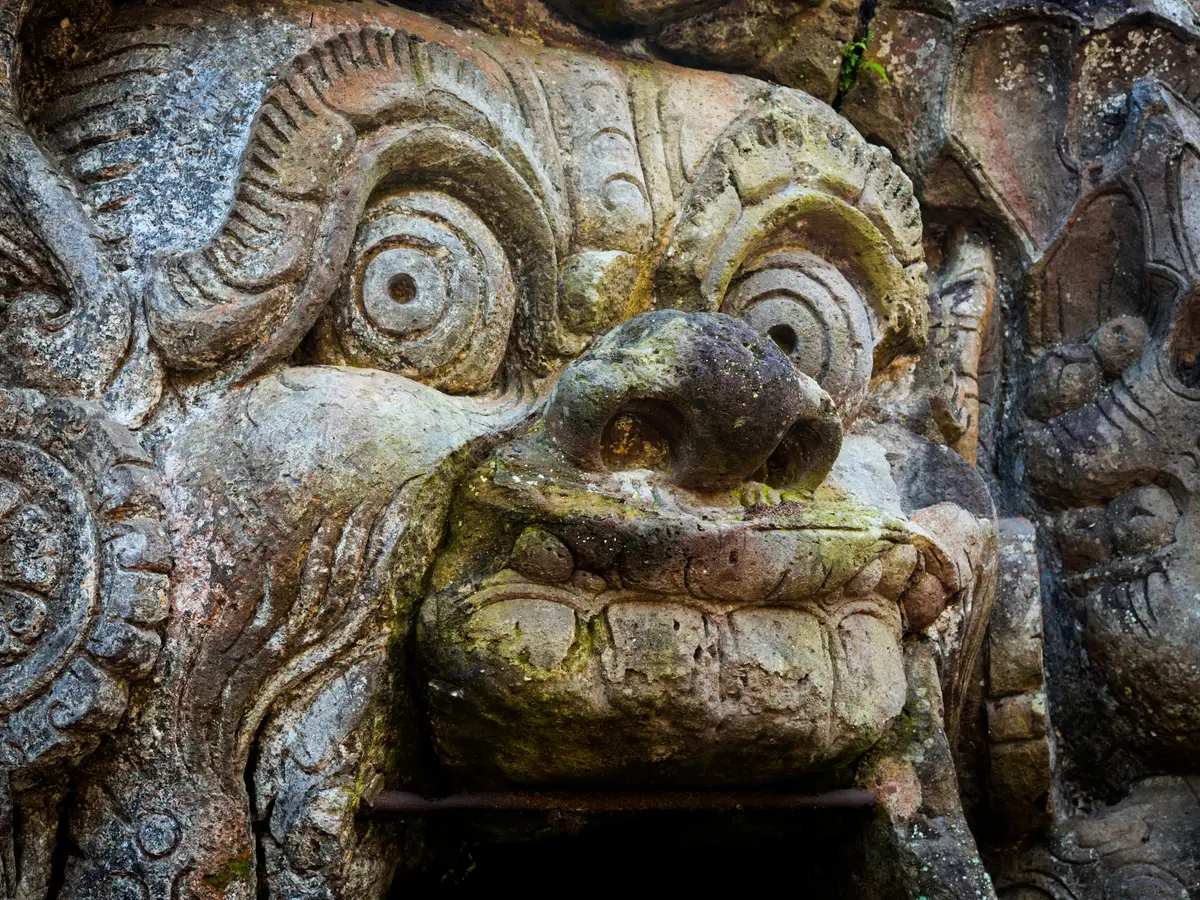 Goa Gajahabout 10 km
Tegalalang Rice Terrace: common questions
How long do you need at Tegalalang Rice Terrace?
About 45 min at the road, longer if you walk down
What are the opening hours of Tegalalang Rice Terrace?
The roadside viewpoints are open through the day; the best light is early. Nothing closes, but what you see depends on where the paddy is in its cycle — flooded, green or cut.
Is there an admission fee at Tegalalang Rice Terrace?
Nothing to look from the public roadside. A donation or fee is asked at some of the paths down, by whoever keeps them.
How far is Tegalalang Rice Terrace from the Benoa cruise port?
It is about 35 km from the Benoa cruise port in a straight line. The road is longer, and the drive depends on traffic.
How much walking is there at Tegalalang Rice Terrace?
You can look from the road without walking at all. Going down into the valley means steep, narrow, uneven paths and a long climb back.
From people who went
Nobody has written here yet. If you go, leave a line — the next ship reads it.
This place has the writing but not the recording.