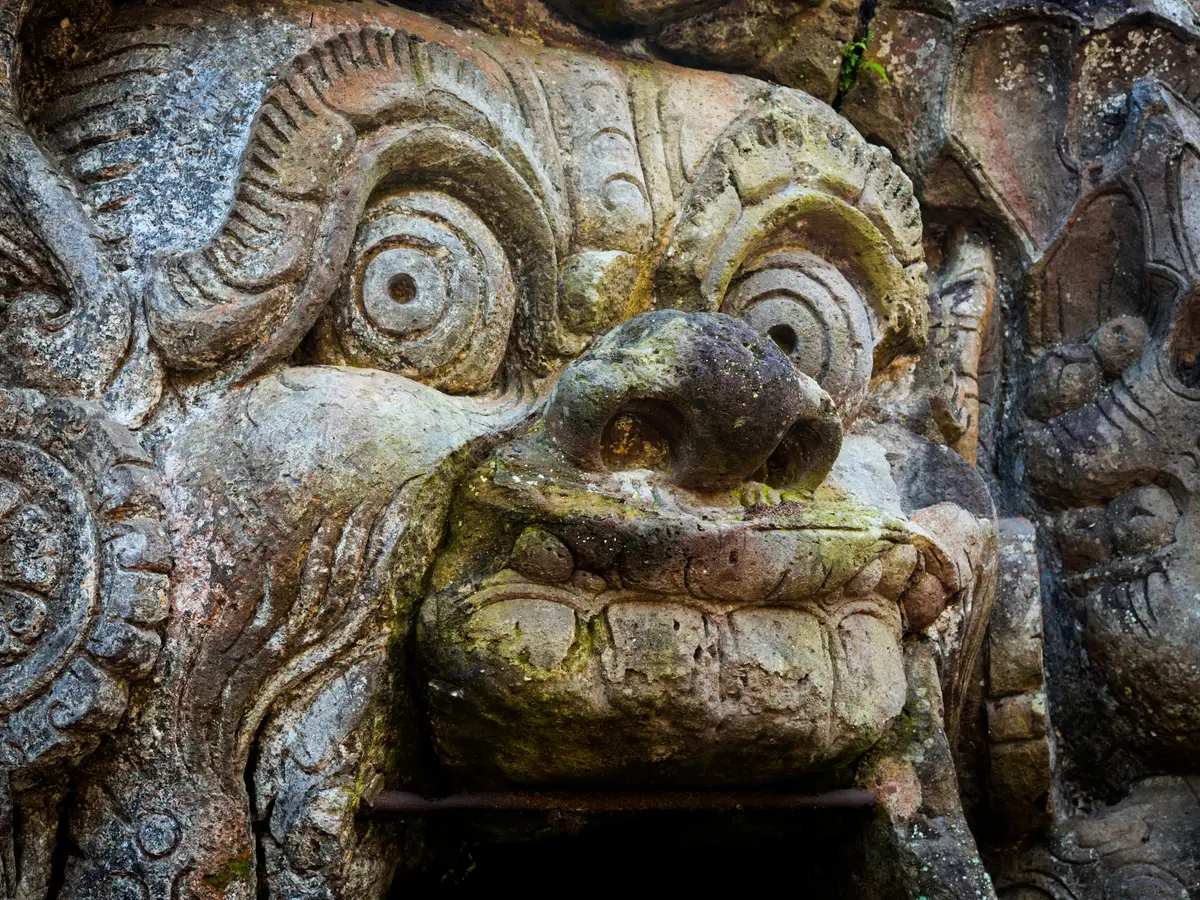
A cave mouth carved as a face, with a bathing pool found in 1954 below it.
Three kilometres from Ubud and the oldest thing you will stand in front of all day, with Hindu and Buddhist carving in one compound. Steps in and steps down.
- Time needed
- About 45–60 min
- Opening hours
- Open by day; check locally before you go.
- Admission
- A ticket is charged at the gate, and a sarong is provided to wear.
- From the Benoa cruise port
- about 26 kmStraight line; the road is longer.
At a glance
- The Elephant Cave: a rock-cut cave mouth carved as a face, with a lingam and yoni and a Ganesha inside
- Published dates differ — the cave is given as 9th century, while its style has also been read as 11th-century Bali Kingdom work
- Rediscovered by Dutch archaeologists in 1923; the bathing pool and fountains were uncovered in 1954
- Seven figures of women with water pitchers stand for seven sacred rivers of India; one was destroyed in an earthquake
- Carved stupas and parasols down in the ravine are Buddhist, not Hindu
- Named in the Javanese poem Desawarnana of 1365
- On the UNESCO tentative list from 19 October 1995 and removed from it in 2015
- About 3 km from the centre of Ubud, so the two go together
About Goa Gajah
Goa Gajah means the Elephant Cave in Balinese, and nobody is entirely sure why. One explanation is that the enormous face carved around the cave mouth was once taken for an elephant's; another is that the name comes from the Ganesha figure inside. Either way, the mouth is the thing you will remember — a wall of rock worked into a face whose open mouth is the doorway, surrounded by more carved faces that are generally read as there to keep evil out.
The cave inside is small, dark and low. It holds a lingam and yoni, the paired symbols of Shiva, and an image of Ganesha. It is believed to have been a place for meditation, and a folk tale says a giant called Kebo Iwa dug it out with a fingernail.
The date is not settled and it is better to say so. Published accounts give the cave as ninth-century work, while the same material elsewhere reads its style as belonging to the eleventh-century Bali Kingdom. The site was named in the Javanese poem Desawarnana of 1365, so it was already old and known then. Dutch archaeologists rediscovered the cave in 1923 — it had never been lost to the people living around it — and the bathing pool and fountains in front of it were not uncovered until 1954 — they had been buried, which is why the pool looks newer than everything around it. Seven figures of women holding water pitchers stand at the pool, representing seven sacred rivers of India; one of them was destroyed in an earthquake.
Do not stop at the cave. Steps lead down into the ravine behind, and what is carved down there — stupas and stone parasols — is Buddhist rather than Hindu. Two religions left their work in one small compound, within a few dozen metres of each other.
One correction worth carrying: this is not a World Heritage Site. It was put on UNESCO's tentative list on 19 October 1995 and taken off it again, with eleven other Indonesian sites, in 2015.
Visiting Goa Gajah
Good to know
Places near Goa Gajah
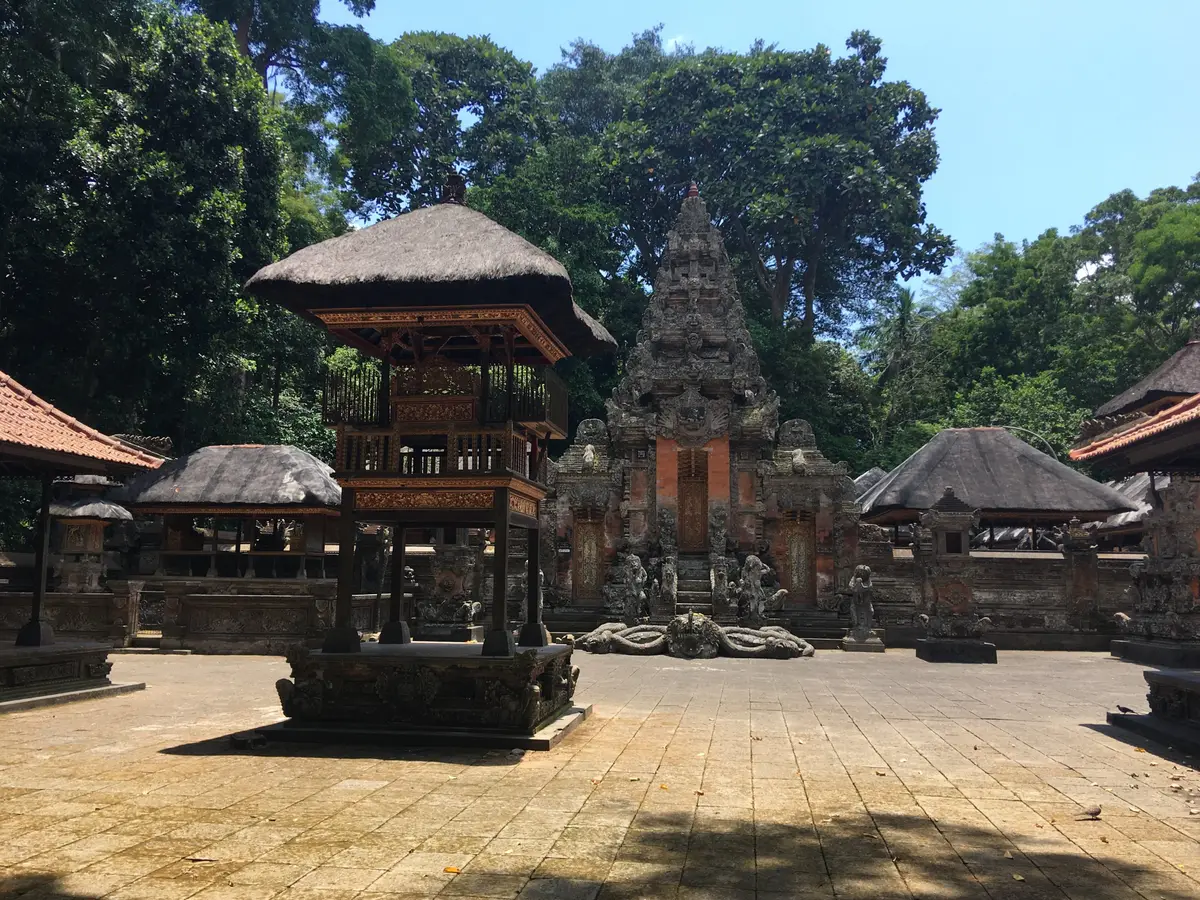 Sacred Monkey Forest Sanctuaryabout 3 km
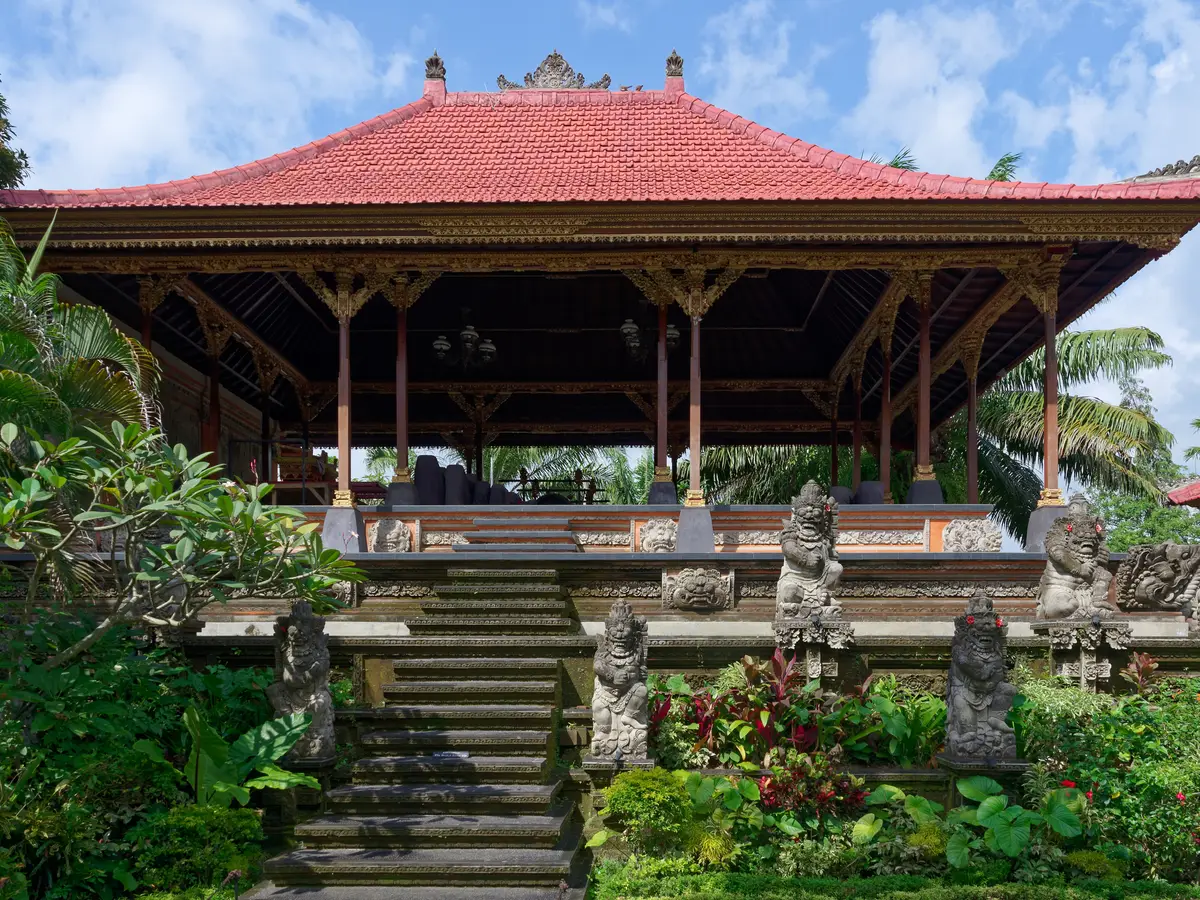 Ubud Royal Palaceabout 3 km
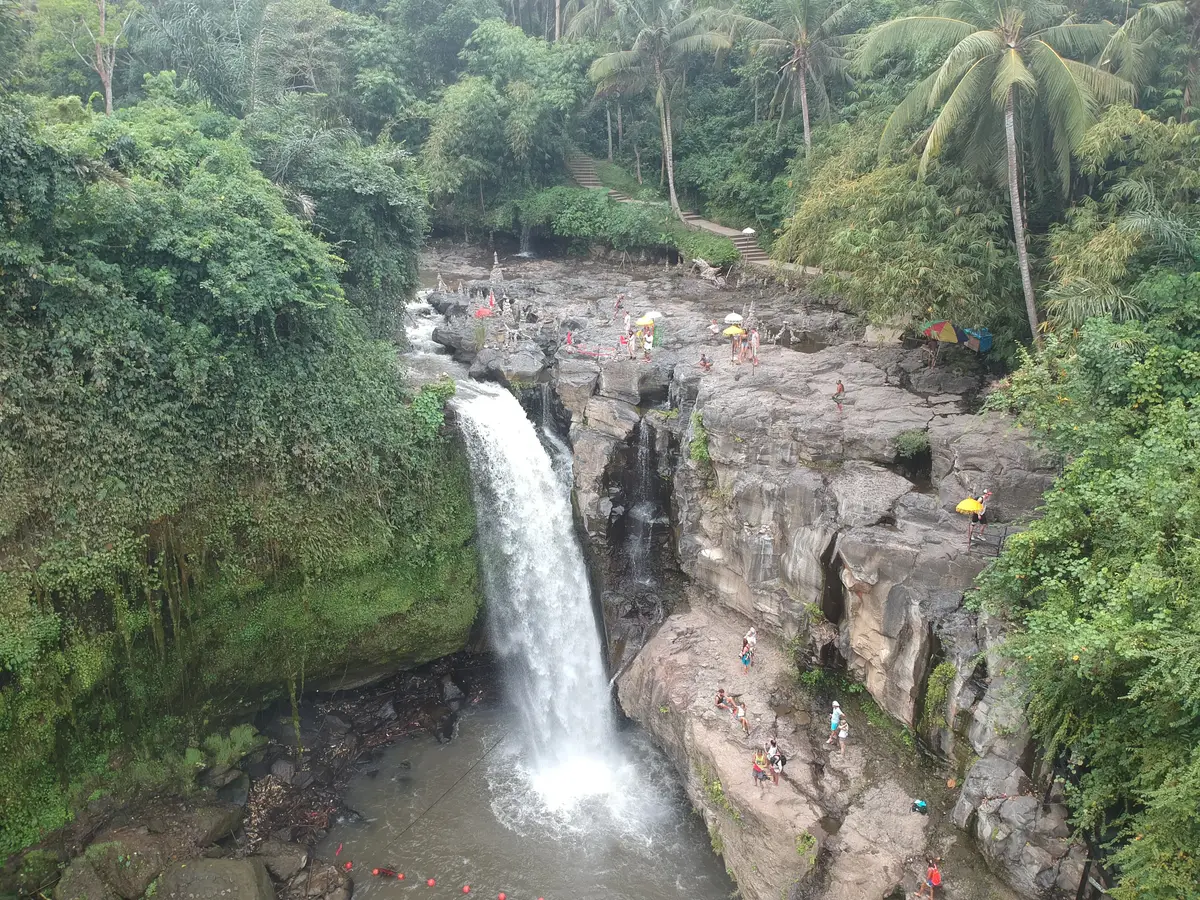 Tegenungan Waterfallabout 6 km
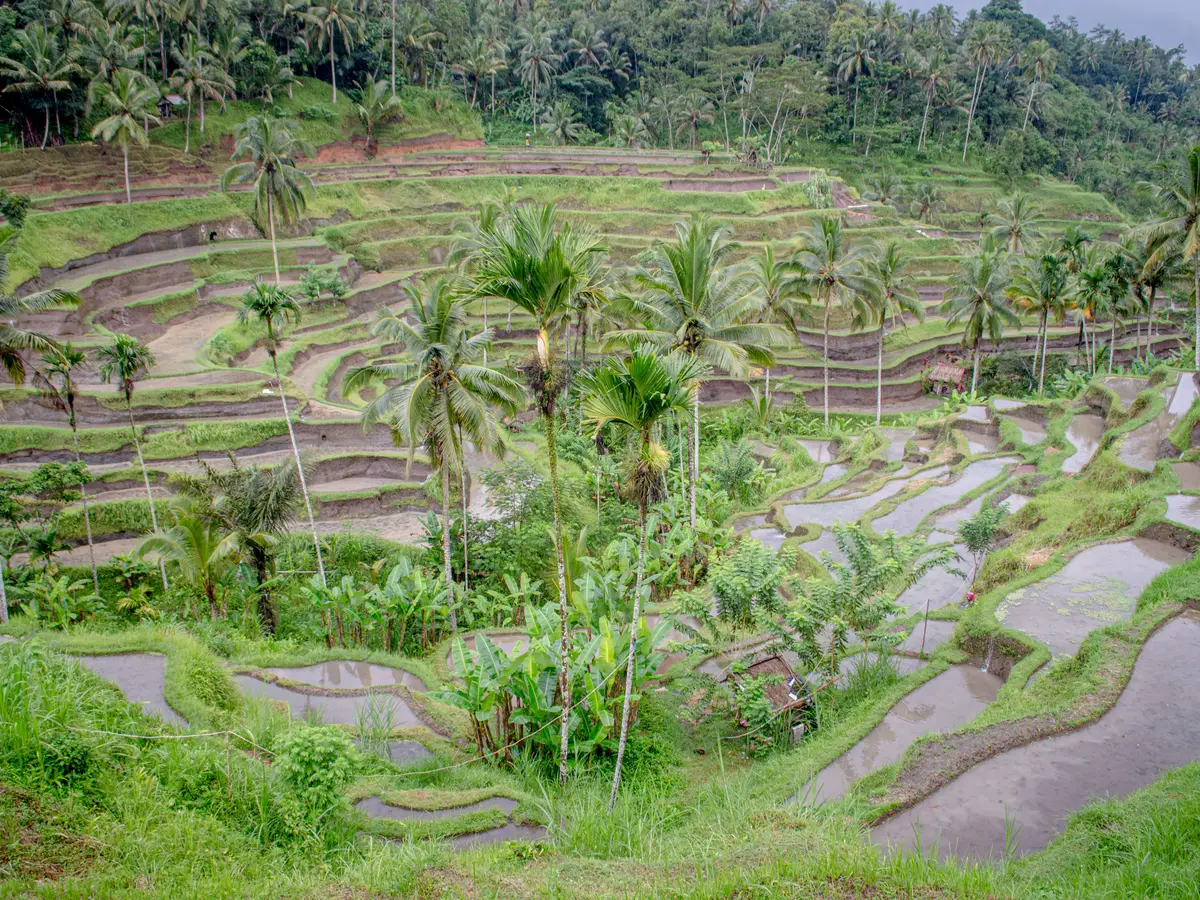 Tegalalang Rice Terraceabout 10 km
Goa Gajah: common questions
How long do you need at Goa Gajah?
About 45–60 min
What are the opening hours of Goa Gajah?
Open by day; check locally before you go. The cave is small and may be closed briefly during a ceremony at the site.
Is there an admission fee at Goa Gajah?
A ticket is charged at the gate, and a sarong is provided to wear.
How far is Goa Gajah from the Benoa cruise port?
It is about 26 km from the Benoa cruise port in a straight line. The road is longer, and the drive depends on traffic.
How much walking is there at Goa Gajah?
Steps down into the compound and more steps into the ravine. The cave floor is dark, low and uneven.
From people who went
Nobody has written here yet. If you go, leave a line — the next ship reads it.
This place has the writing but not the recording.