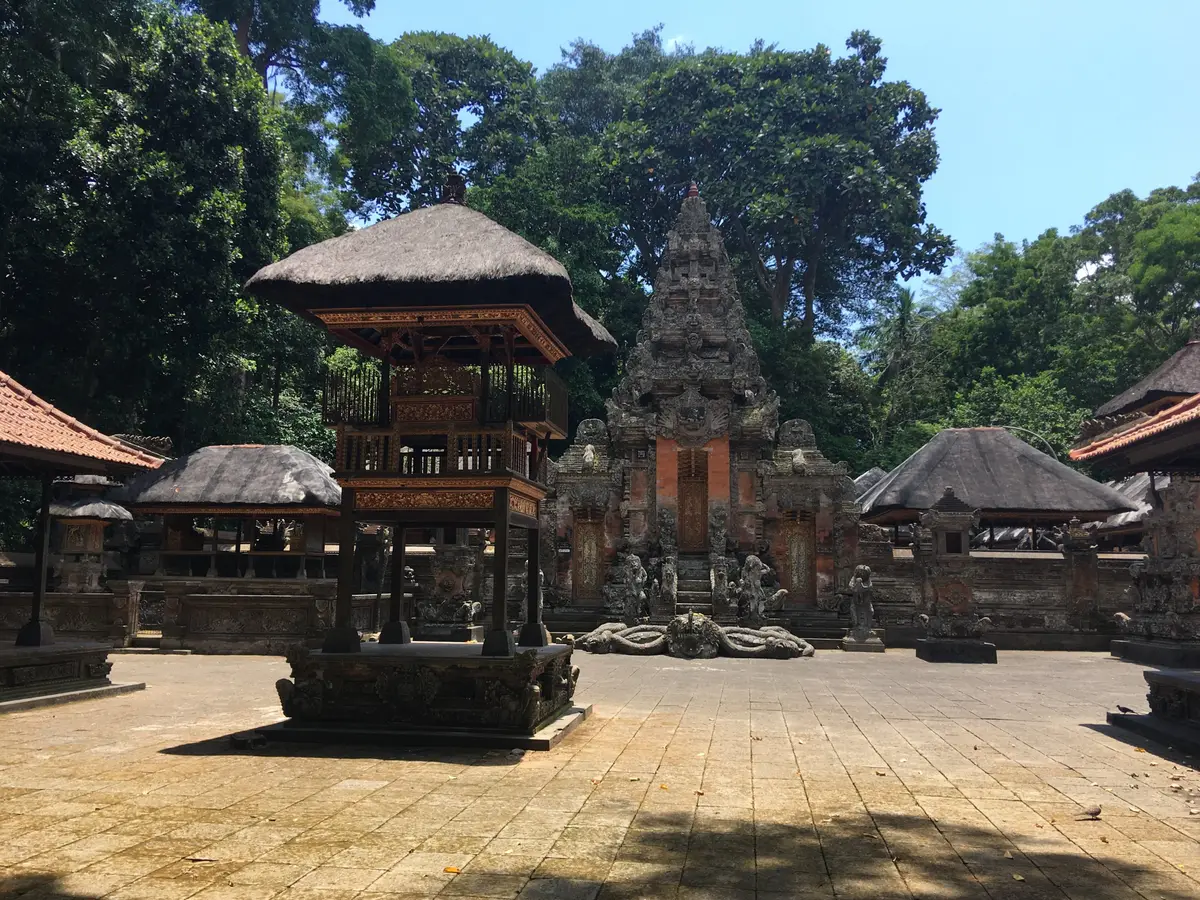
Ten hectares of forest with three 14th-century temples and five macaque groups in it.
Walkable from the Ubud palace, shaded the whole way round, and the one place where a working temple, a burial ground and a wild troop share the same ten hectares.
- Time needed
- About 1–1.5 hours
- Opening hours
- Open by day; check locally before you go.
- Admission
- A ticket is charged at the gate.
- From the Benoa cruise port
- about 26 kmStraight line; the road is longer.
At a glance
- Mandala Suci Wenara Wana: about 10 hectares of forest with at least 115 tree species
- Balinese long-tailed macaques in separate territorial groups — published counts give five, six or ten
- Counts published for the troop differ by year — about 605 in a 2011 breakdown, about 1,260 in 2023
- Three temples, apparently built around 1350: Pura Dalem Agung Padangtegal, Pura Beji, Pura Prajapati
- Pura Beji has a holy spring used for purification before ceremonies
- A cemetery beside Pura Prajapati holds the dead until a mass cremation held every five years
- Owned by the village of Padangtegal, on the Tri Hita Karana principle of harmony between people, nature and God
- About 1.4 km south of the Ubud palace — walkable
About Sacred Monkey Forest Sanctuary
Its own name is Mandala Suci Wenara Wana, and the sanctuary is about ten hectares of forest holding at least 115 species of tree, in the middle of a town. The monkeys are Balinese long-tailed macaques, and they live here in groups that each hold their own territory within the wood. How many groups is itself disputed: five, six and ten are all published, the last by the sanctuary itself. How many animals depends on which year you ask: a detailed count in 2011 came to about 605, and the current figure is about 1,260 as of 2023. Published numbers for this troop are not stable, so take any single figure as a snapshot.
The forest is not a zoo and the monkeys are not the whole of it. Three temples stand inside it, apparently built around 1350. Pura Dalem Agung Padangtegal is the main one, in the south-west, where Hyang Widhi is worshipped as Shiva. Pura Beji, in the north-west, has a holy spring used for purification before ceremonies. Pura Prajapati is in the north-east, and the cemetery next to it holds the dead until a mass cremation, which is held every five years. People come here to worship and to bury, and visitors walk through the middle of that.
The forest belongs to the village of Padangtegal, whose members sit on its governing council, and it is run on the principle of Tri Hita Karana — harmony between people, nature and God. It also conserves plants and animals used in Hindu ritual and is used as a place to study monkey behaviour.
The practical rules come from the sanctuary itself. Staff feed the monkeys sweet potato three times a day along with other fruit and leaves; banana sales were stopped because the monkeys were getting fat. Visitors may not feed them snacks — no peanuts, biscuits, bread. Do not pull food back once you have offered it and do not touch a monkey: either can get you bitten. Staff carry slingshots for the aggressive ones.
Visiting Sacred Monkey Forest Sanctuary
Good to know
Places near Sacred Monkey Forest Sanctuary
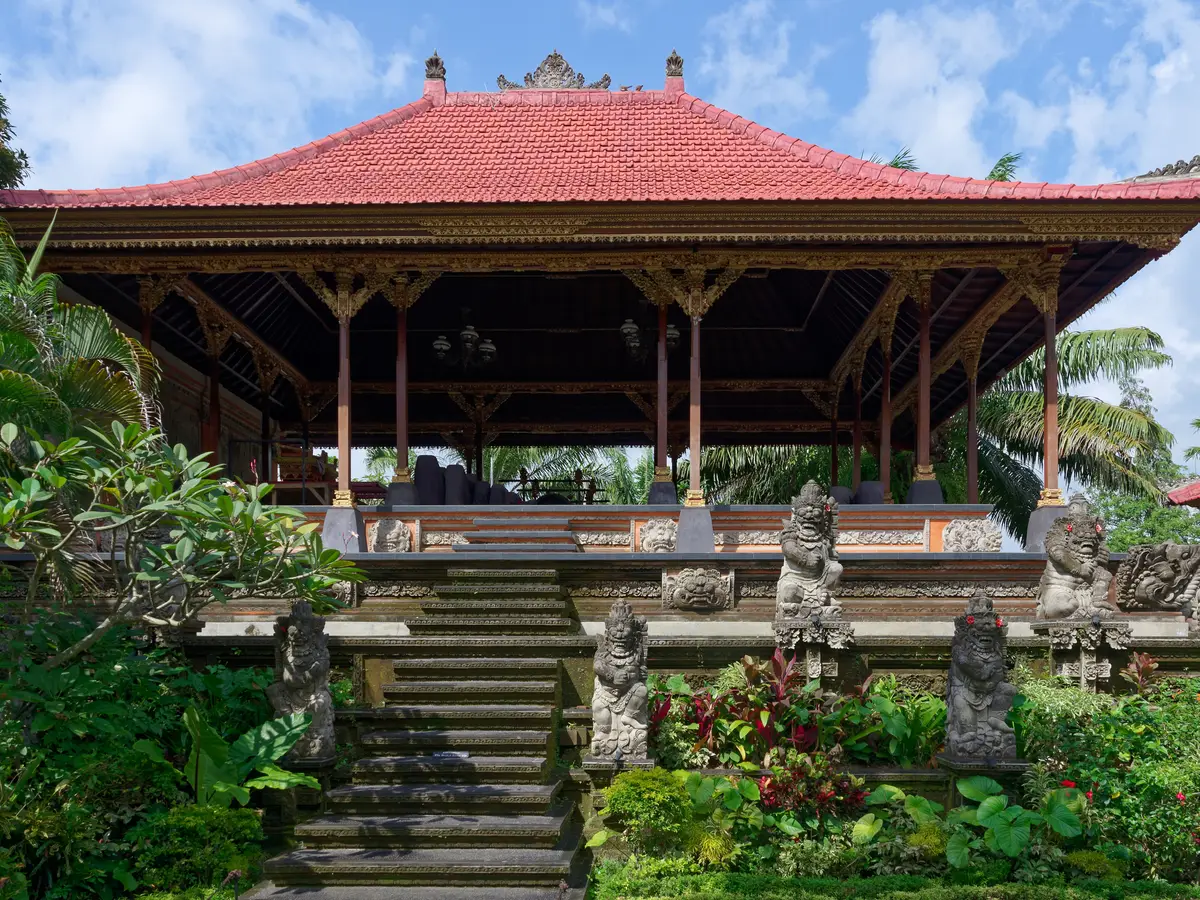 Ubud Royal Palaceabout 1 km
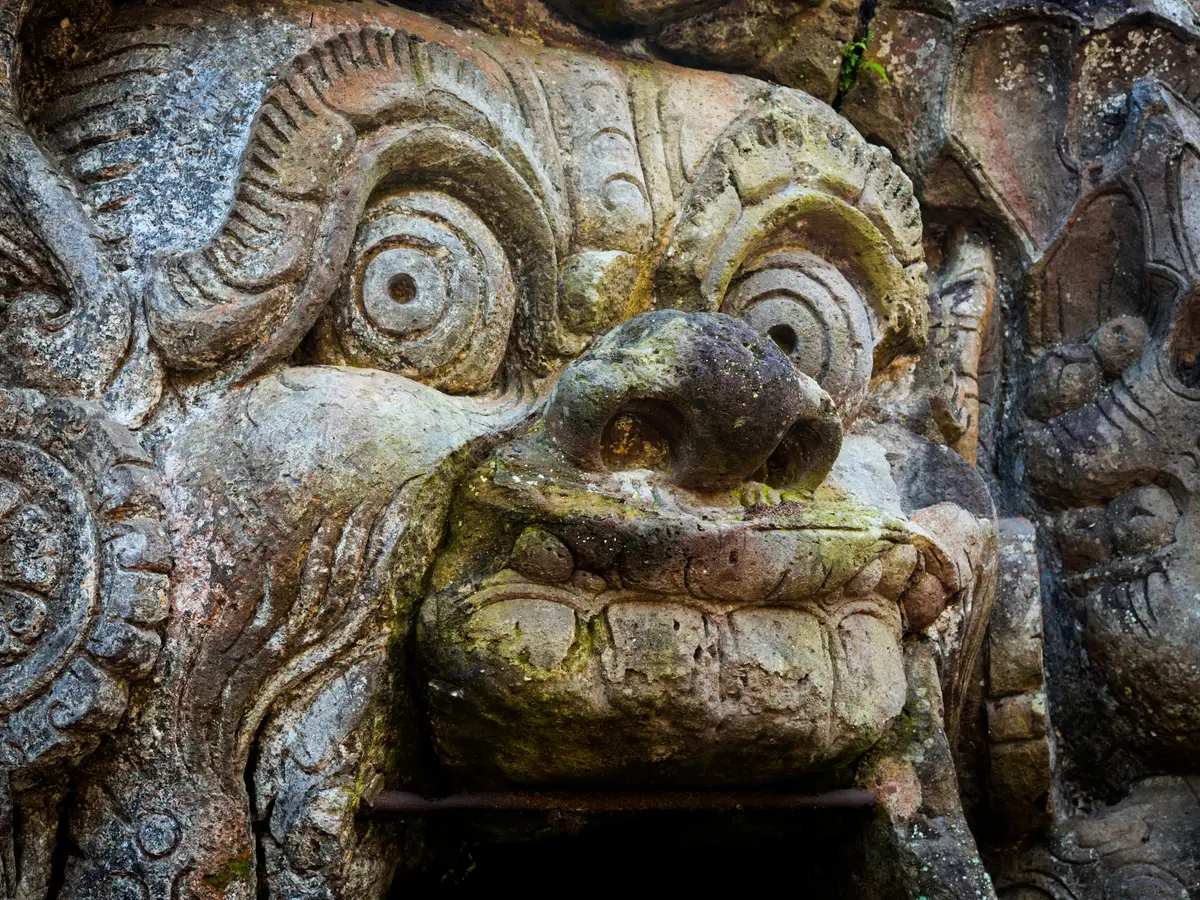 Goa Gajahabout 3 km
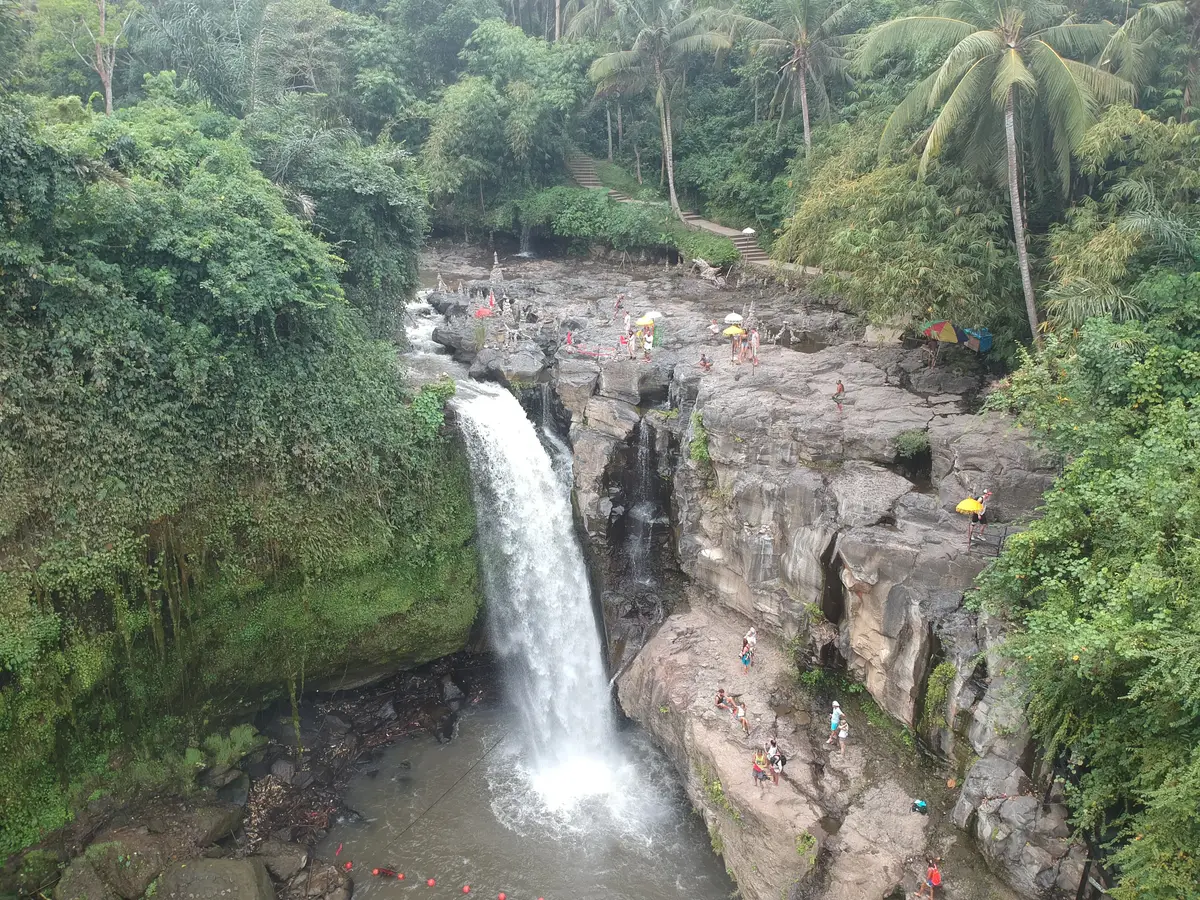 Tegenungan Waterfallabout 7 km
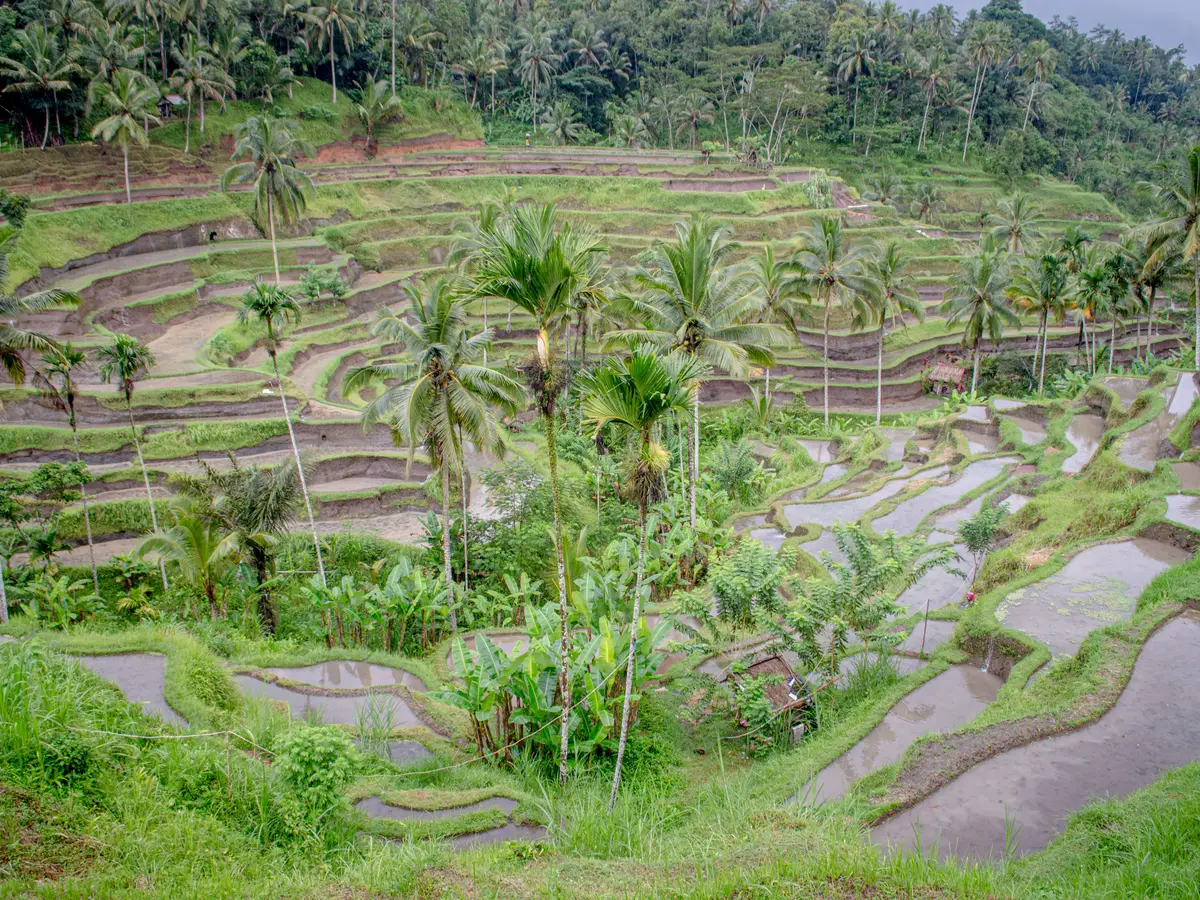 Tegalalang Rice Terraceabout 10 km
Sacred Monkey Forest Sanctuary: common questions
How long do you need at Sacred Monkey Forest Sanctuary?
About 1–1.5 hours
What are the opening hours of Sacred Monkey Forest Sanctuary?
Open by day; check locally before you go. The temple courtyards are for worshippers. Paths may close in heavy rain.
Is there an admission fee at Sacred Monkey Forest Sanctuary?
A ticket is charged at the gate.
How far is Sacred Monkey Forest Sanctuary from the Benoa cruise port?
It is about 26 km from the Benoa cruise port in a straight line. The road is longer, and the drive depends on traffic.
How much walking is there at Sacred Monkey Forest Sanctuary?
Stone paths, steps and a steep ravine crossing under high trees. Slippery when wet.
From people who went
Nobody has written here yet. If you go, leave a line — the next ship reads it.
This place has the writing but not the recording.