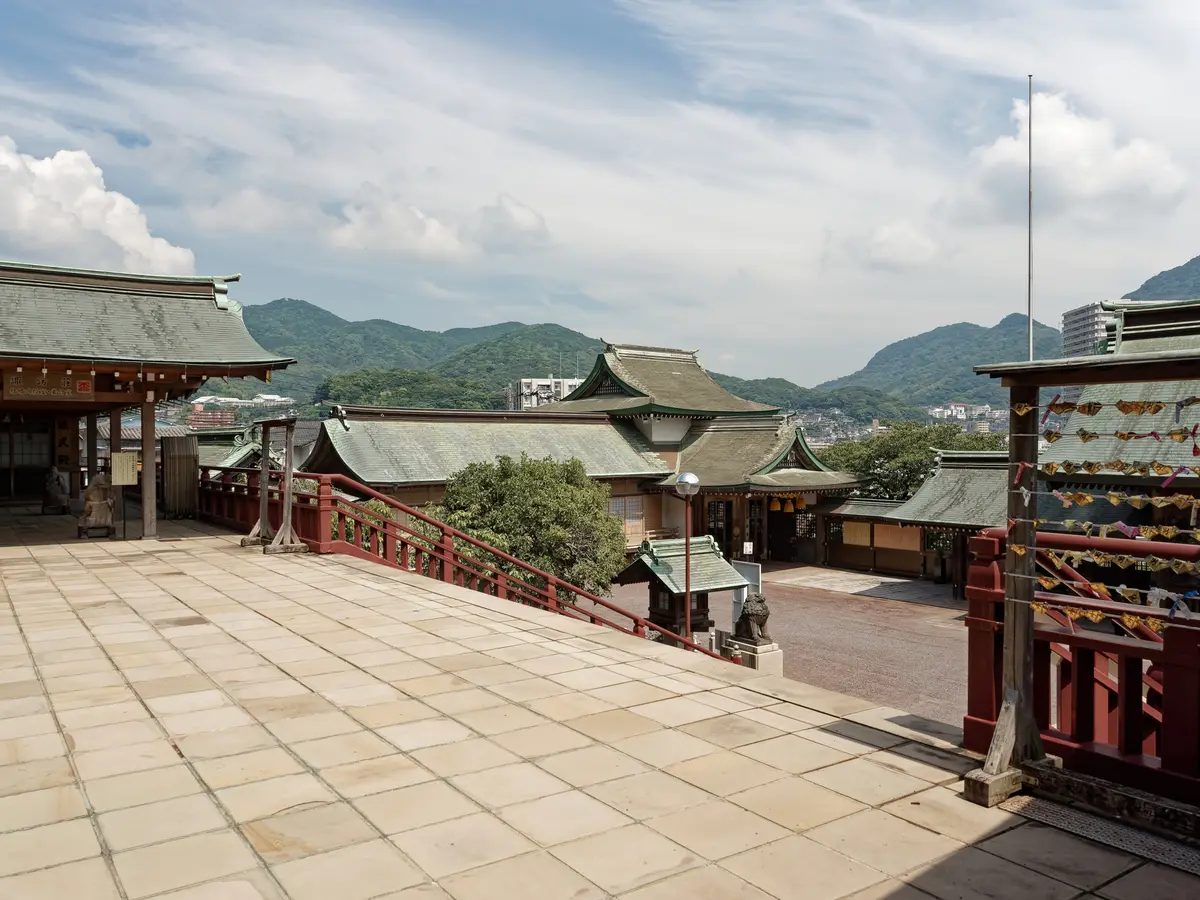
Nagasaki's main Shinto shrine, up a long stone stairway.
The city's own shrine and the stage for its biggest festival, with a view over the rooftops as the reward for the climb. The steps are the main effort.
- Time needed
- About 30–45 min
- Opening hours
- The grounds are generally open; check locally for the shrine office's hours.
- Admission
- A working shrine with open grounds.
- From the Nagasaki cruise port
- about 2 kmStraight line; the road is longer.
At a glance
- The principal Shinto shrine of Nagasaki, on a wooded hillside above the old town
- A stone stairway of nearly 200 steps climbs through torii gates to the main hall
- Re-founded in 1625 by the priest Aoki Kensei and moved to this hillside around 1648
- Home of Nagasaki Kunchi, the city's great festival, held on 7–9 October
- Survived the atomic bombing of 9 August 1945
- Stone guardian dogs with their own customs, including the 'stop' dogs with string tied to their legs
- A view back over the city from the top of the steps
About Suwa Shrine
Suwa Shrine is the principal Shinto shrine of Nagasaki, set on a wooded hillside north-east of the old town. It was re-founded in 1625 by a Shugendo priest, Aoki Kensei, in the years after the Tokugawa government banned Christianity. Nagasaki then had the largest Christian population in Japan, and the new shrine grew up in the decades when the authorities were pressing the town back towards Shinto and Buddhism. Around 1648 it moved to the hillside where it stands now.
The approach is the experience. From the street nearly two hundred stone steps rise in several flights through a series of torii gates to the shrine buildings, with landings to rest on and the city opening out behind you as you climb. The shrine survived the atomic bombing of 1945, sheltered from Urakami by the hills between, and was extensively repaired in 1984.
In the grounds, look for the stone guardian dogs, each with its own custom. The best known are the stop dogs: people who want to give something up tie a strip of paper or a string round the animals' front legs and pray for help.
On 7–9 October each year the shrine is the centre of Nagasaki Kunchi, the city's autumn festival, which began in the shrine's early years. Neighbourhoods take turns to perform dances and to haul floats, and the programme shows the foreign influences that passed through the port. The broad steps in front of the shrine serve as seating for the performances.
Visiting Suwa Shrine
Good to know
Places near Suwa Shrine
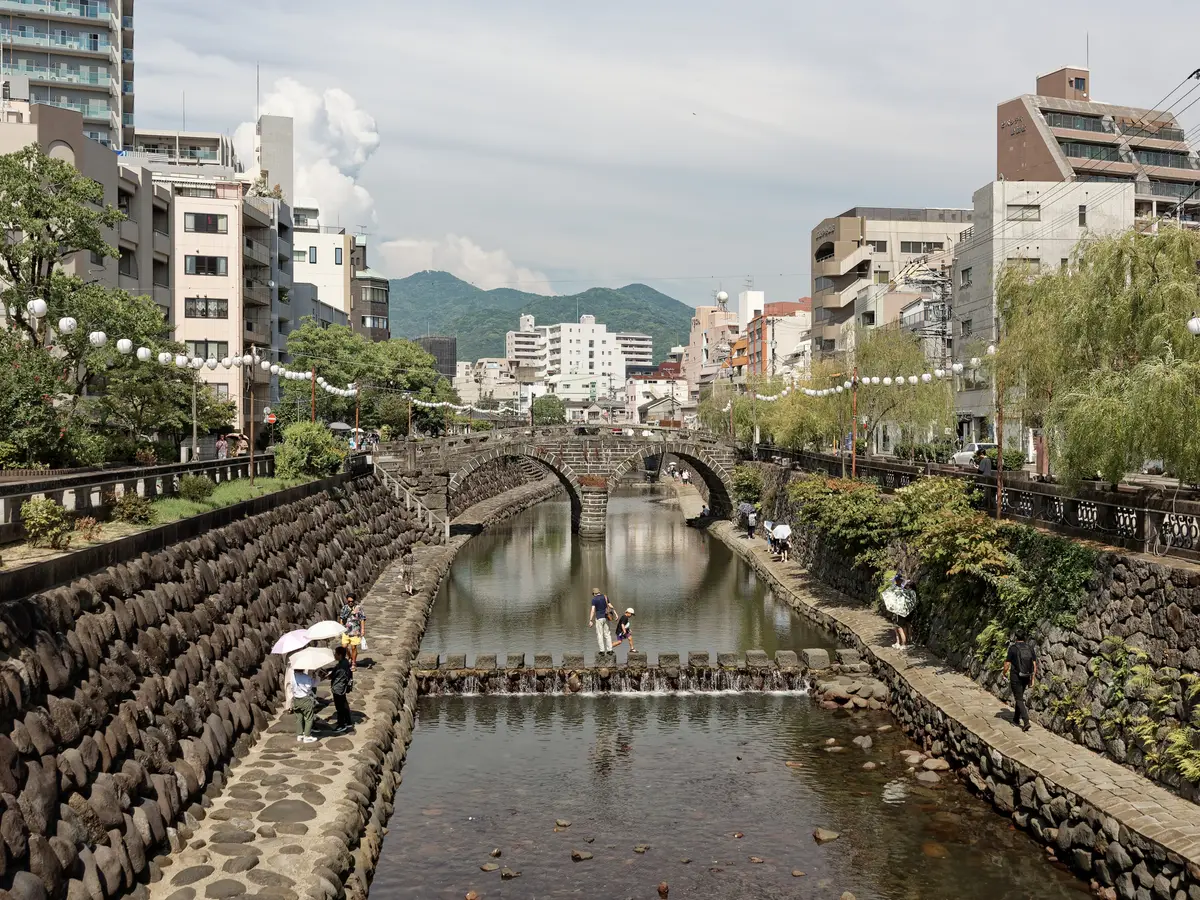 Meganebashi (Spectacles Bridge)under 1 km
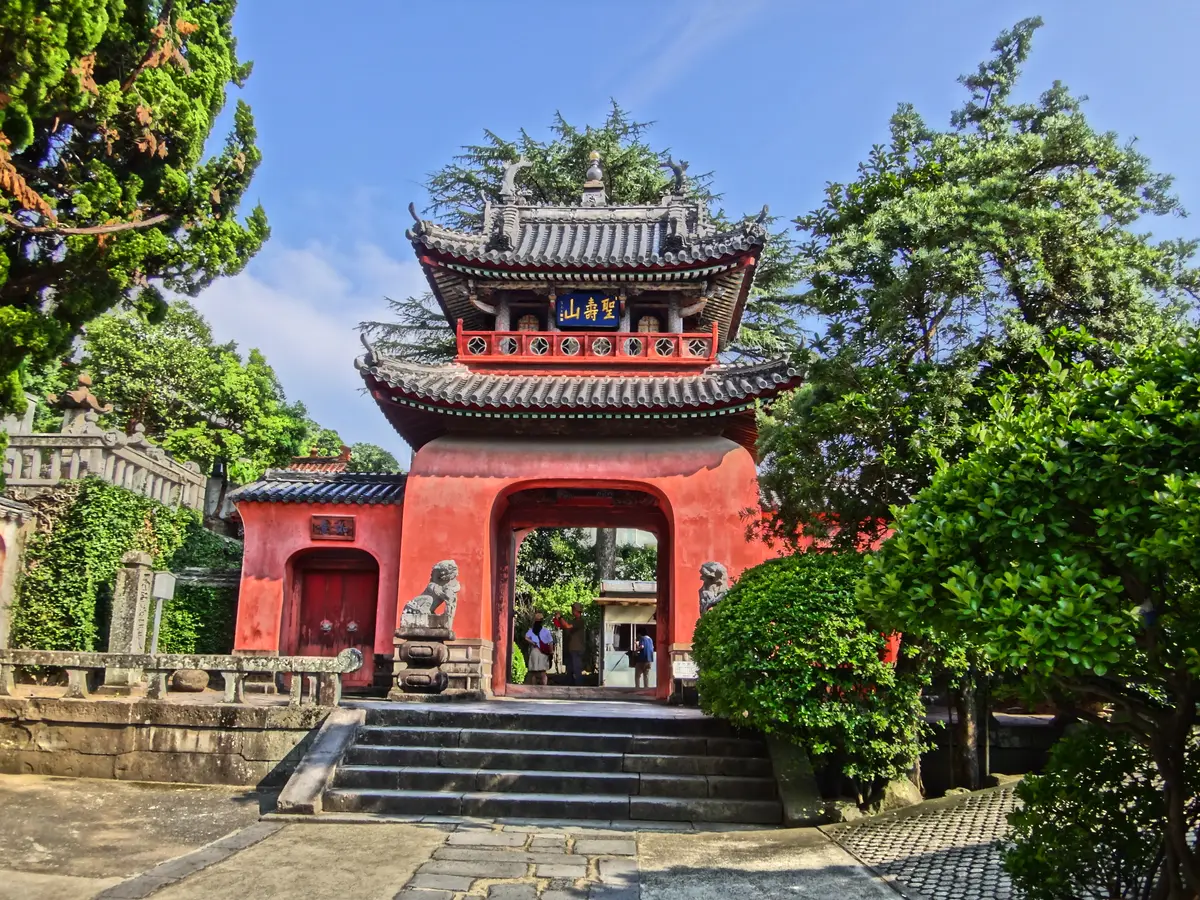 Sofukuji Templeabout 1 km
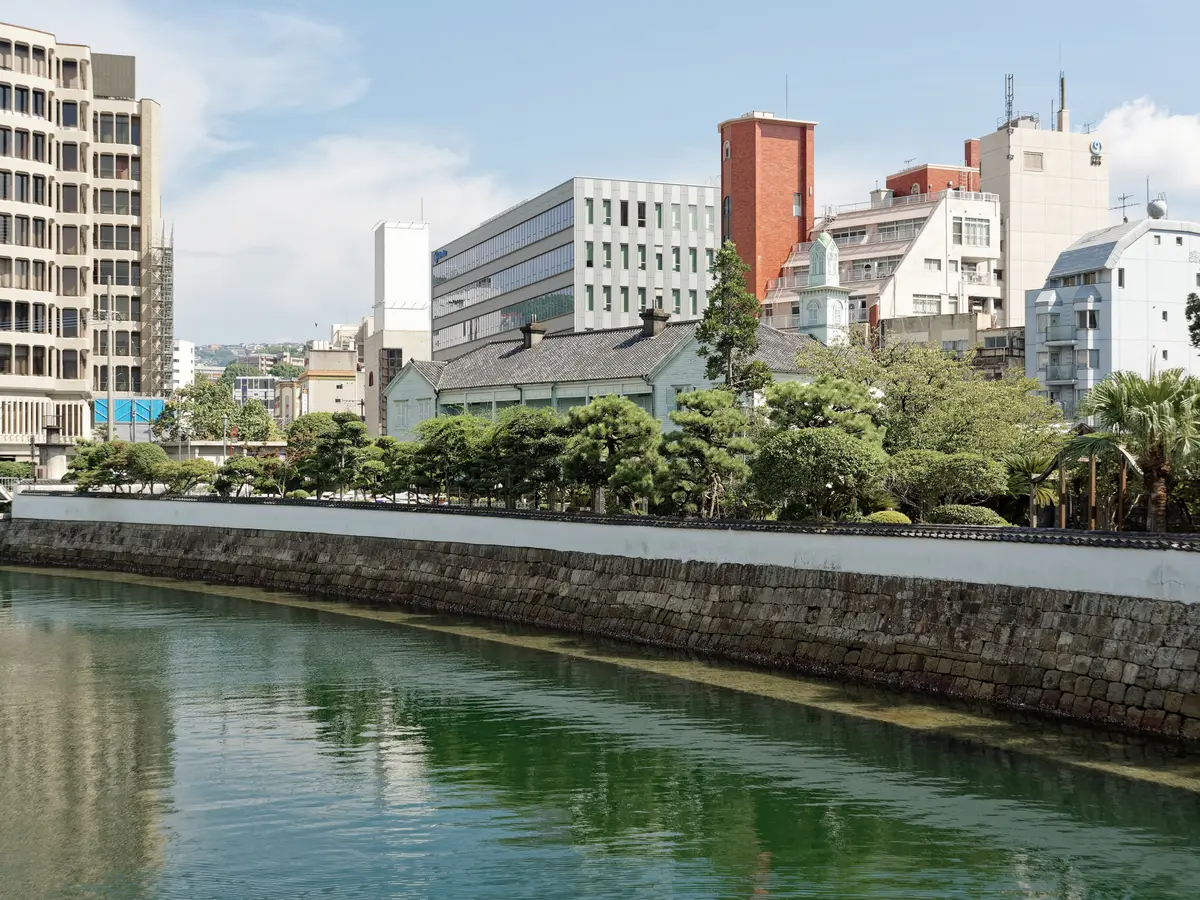 Dejimaabout 1 km
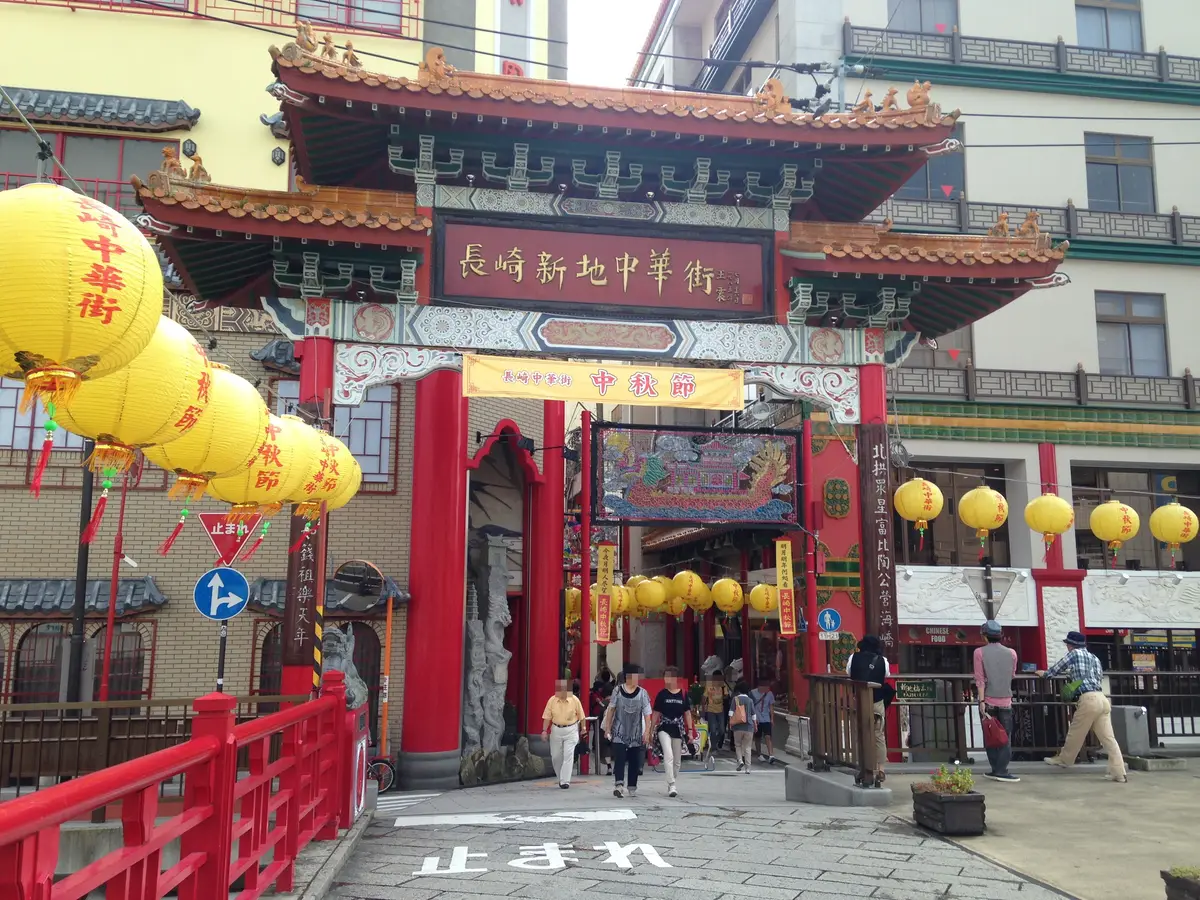 Nagasaki Shinchi Chinatownabout 2 km
Suwa Shrine: common questions
How long do you need at Suwa Shrine?
About 30–45 min
What are the opening hours of Suwa Shrine?
The grounds are generally open; check locally for the shrine office's hours. Access may be restricted during festival preparations; check locally around 7–9 October.
Is there an admission fee at Suwa Shrine?
A working shrine with open grounds.
How far is Suwa Shrine from the Nagasaki cruise port?
It is about 2 km from the Nagasaki cruise port in a straight line. The road is longer, and the drive depends on traffic.
How much walking is there at Suwa Shrine?
Nearly 200 stone steps from the street to the main hall, with landings; ask locally about the road approach if steps are difficult.
From people who went
Nobody has written here yet. If you go, leave a line — the next ship reads it.
This place has the writing but not the recording.