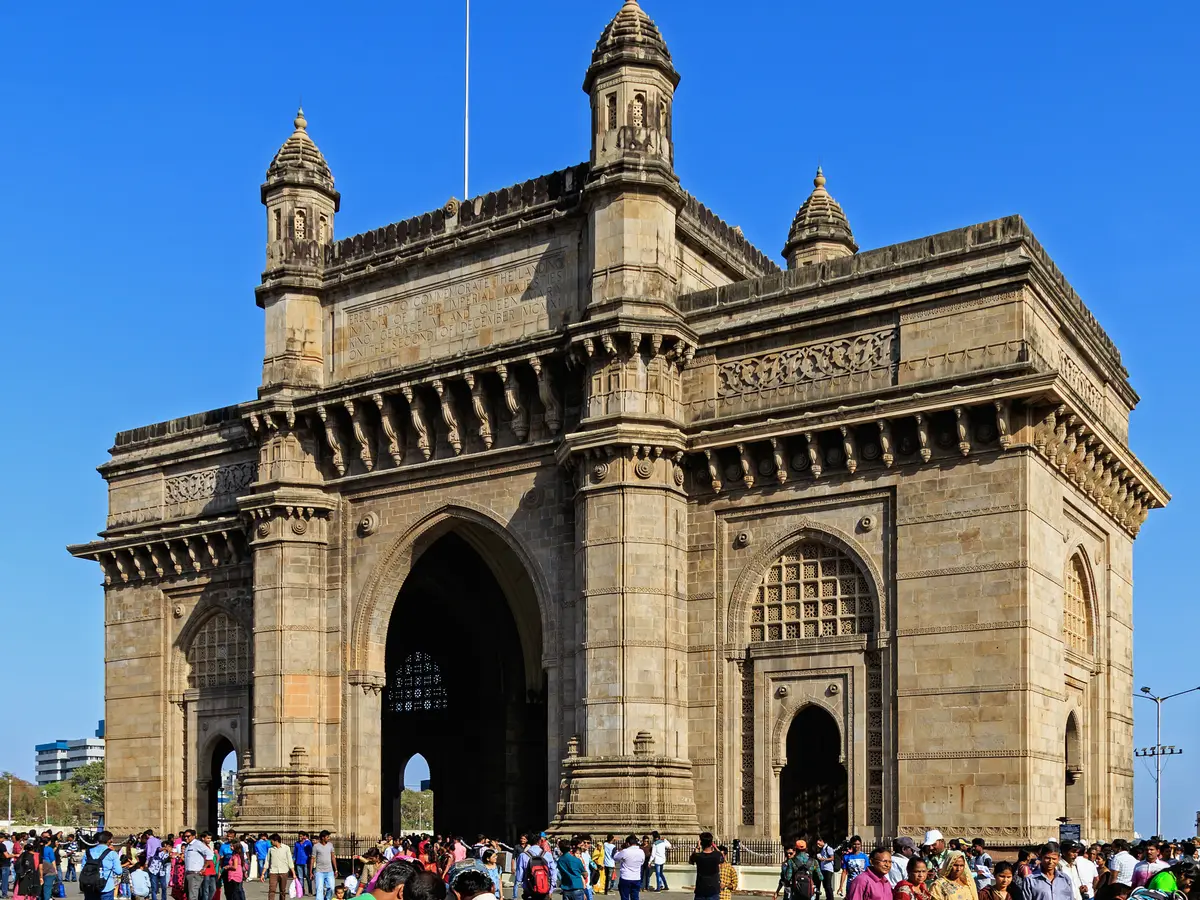
The harbour-front triumphal arch of 1924, and the pier for Elephanta.
The place the city puts on its postcards, ten minutes from the berth, and the pier your Elephanta boat leaves from. Flat, open and shadeless, so it is better early or late than at midday.
- Time needed
- About 30–45 min
- Opening hours
- An open public space on the waterfront; the plaza is busiest in the late afternoon and on weekends. Security checks and closures happen without notice.
- Admission
- No ticket for the plaza; boat rides are sold separately at the jetty.
- From the Mumbai cruise port
- about 1 kmStraight line; the road is longer.
At a glance
- A 26 m basalt arch on the harbour front at Apollo Bunder, finished in 1924
- Built to mark the landing of King George V and Queen Mary on 2 December 1911
- Designed by the Scottish architect George Wittet in the Indo-Saracenic manner, with details from 16th-century Gujarat
- Foundation stone laid on 31 March 1913; opened to the public on 4 December 1924
- The last British troops in India marched out through it on 28 February 1948
- A protected monument under the Archaeological Survey of India
- The jetties beside it are where boats for Elephanta Island leave
About Gateway of India
The Gateway of India stands on the water at Apollo Bunder, facing out across Mumbai Harbour. It was raised to commemorate the landing of King George V and Queen Mary on 2 December 1911, the first visit to India by a reigning British monarch. The foundation stone was laid on 31 March 1913, the design was settled in 1914, and the arch was finished in 1924 and opened to the public on 4 December that year.
The architect was George Wittet, a Scot who also designed the city museum up the road. The style is usually called Indo-Saracenic: a European structure wearing Indian clothes, with much of the detail borrowed from sixteenth-century Gujarat. It is built of yellow basalt and reinforced concrete, stands 26 m high, and the central dome is 15 m across. Four turrets rise above the arch, and the inscription says only that it was erected to commemorate the landing.
The arch was meant as a ceremonial door into India, and the most quoted moment in its history is the day it worked the other way. On 28 February 1948 the First Battalion of the Somerset Light Infantry, the last British troops in India, marched through it to their ships. Today the plaza is a city gathering place, with the Taj Mahal Palace hotel behind it and launches tied up at the jetties alongside. Those jetties are the normal departure point for Elephanta Island. A separate passenger jetty and terminal has been approved a short way south at Radio Club, cleared by the courts and begun, but the first contractor was dropped in 2026 and the work was put out to tender again, so it is unfinished and its date is not worth printing. The stated aim is to take the boat traffic off this plaza; the ferry operators have said the new jetty does not suit their boats.
Visiting Gateway of India
Good to know
Places near Gateway of India
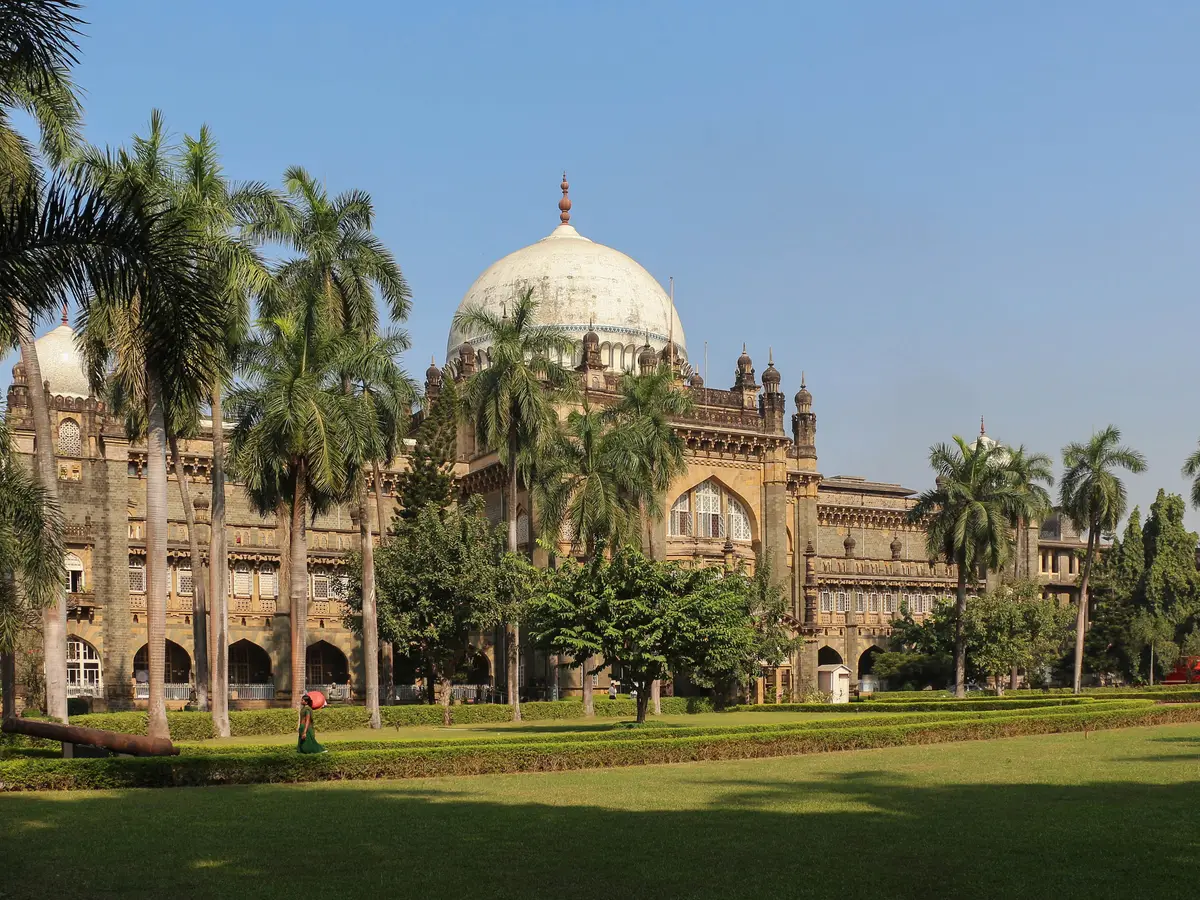 Chhatrapati Shivaji Maharaj Vastu Sangrahalayaunder 1 km
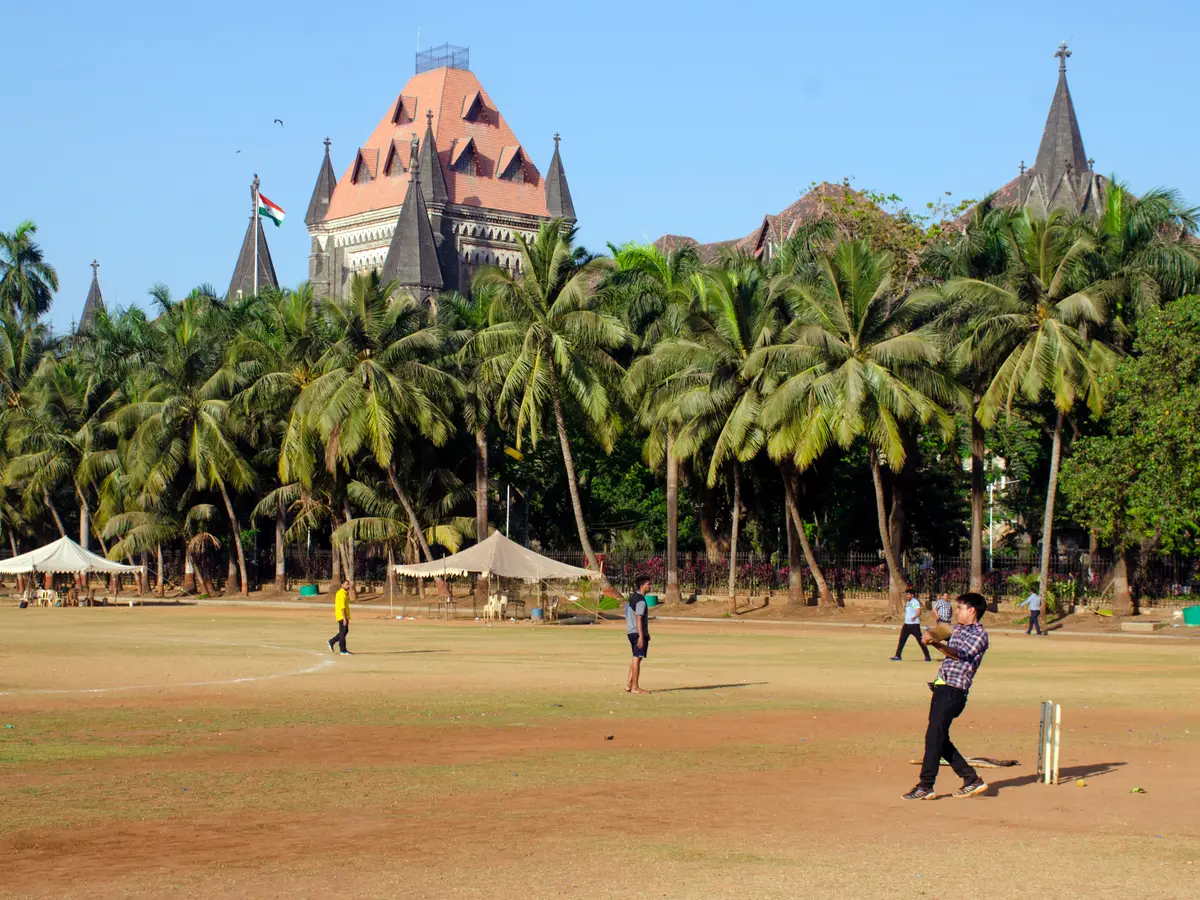 Oval Maidanabout 1 km
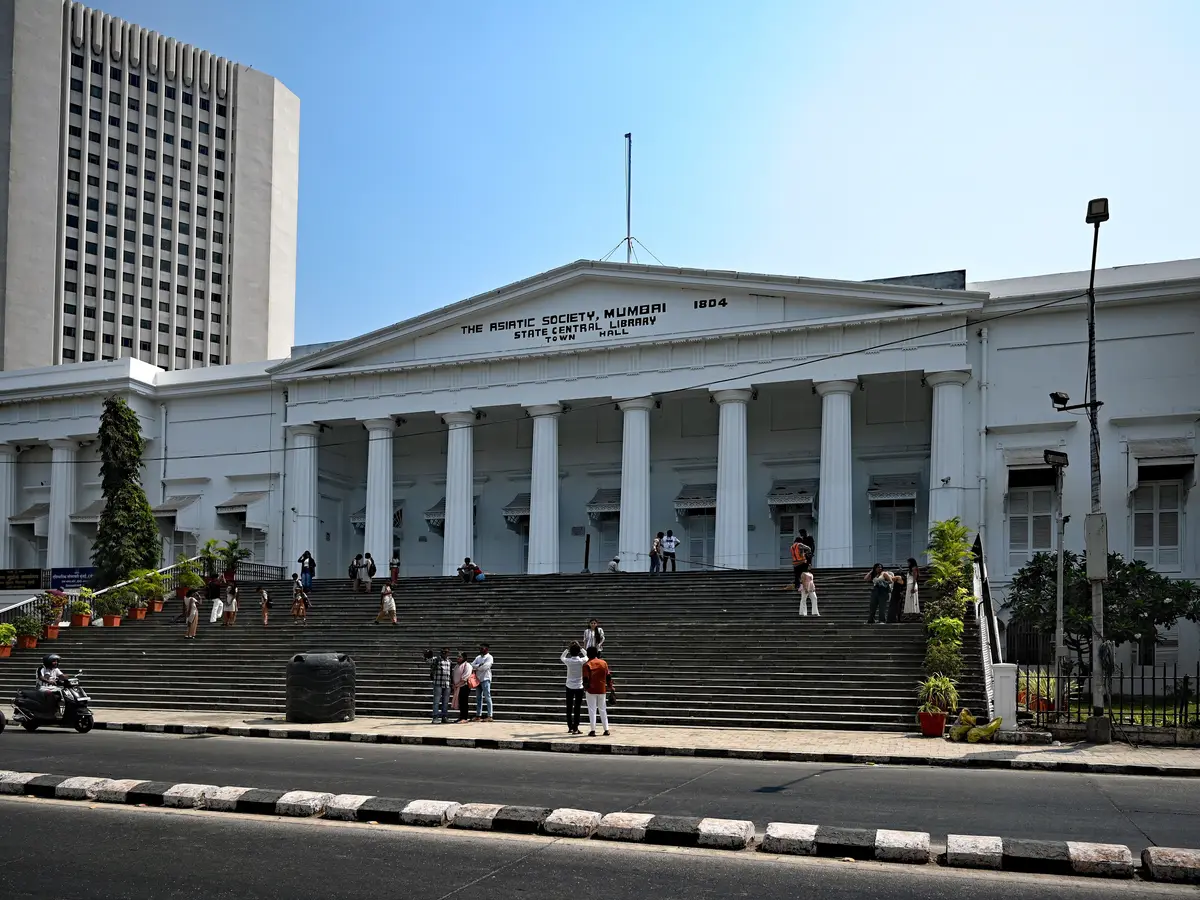 The Asiatic Society and the Town Hallabout 1 kmChhatrapati Shivaji Maharaj Terminusabout 2 km
Gateway of India: common questions
How long do you need at Gateway of India?
About 30–45 min
What are the opening hours of Gateway of India?
An open public space on the waterfront; the plaza is busiest in the late afternoon and on weekends. Security checks and closures happen without notice. No regular closing day, but the plaza can be shut for events or for security.
Is there an admission fee at Gateway of India?
No ticket for the plaza; boat rides are sold separately at the jetty.
How far is Gateway of India from the Mumbai cruise port?
It is about 1 km from the Mumbai cruise port in a straight line. The road is longer, and the drive depends on traffic.
How much walking is there at Gateway of India?
Flat paved plaza. There is no entry inside the arch.
From people who went
Nobody has written here yet. If you go, leave a line — the next ship reads it.
This place has the writing but not the recording.