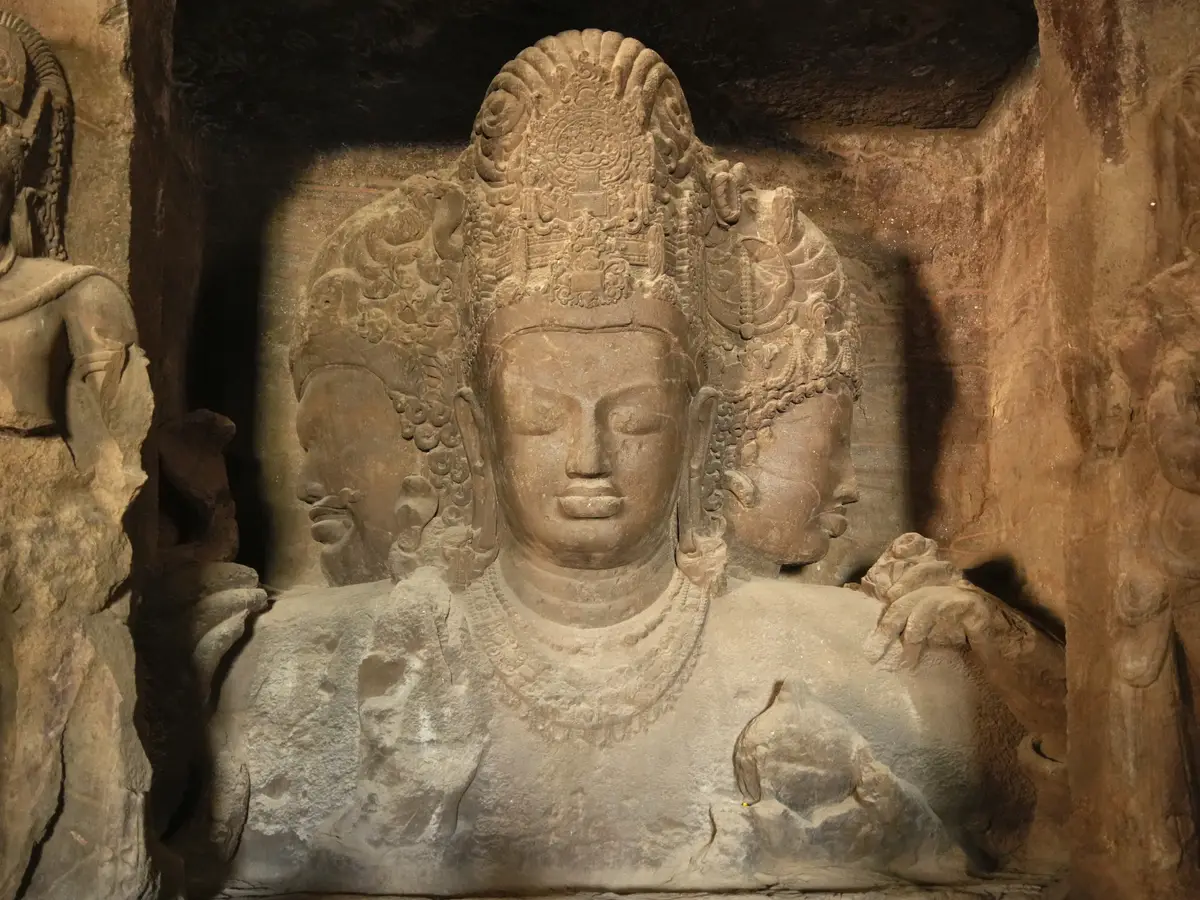
Rock-cut Shiva temples on a harbour island, reached only by boat.
The only one of Mumbai’s three World Heritage properties you reach by boat, and the strongest thing to see at this port. It is also the longest: two hours on the water, a kilometre of walking and 120 steps, so it fills most of a day ashore and leaves no room for anything else.
- Time needed
- About 4–5 hours including the boat
- Opening hours
- The caves are closed on Mondays. Boats run from the morning and the last one back leaves in the late afternoon; the times change, so check at the jetty on the day.
- Admission
- Separate charges for the boat and for the site; check at the jetty and the ticket counter.
- From the Mumbai cruise port
- about 10 kmStraight line; the road is longer.
At a glance
- Rock-cut temples on an island in Mumbai Harbour, inscribed by UNESCO in 1987
- Reached only by boat; the crossing from the Gateway of India takes about an hour each way
- Five Hindu caves on the western hill and two Buddhist caves on the eastern one
- Cut between the 5th and 9th centuries CE, with most scholars placing the main work in the 5th to 7th
- The Trimurti, a three-faced Shiva carved about six metres high, on the back wall of the Great Cave
- The island's Marathi name is Gharapuri; the Portuguese renamed it after an elephant sculpture now in a Mumbai park
- About 120 steep steps from the ticket counter up to the main cave
About Elephanta Caves
Elephanta is an island in Mumbai Harbour, roughly ten kilometres east of the city in a straight line, and the only way there is by boat. Its Marathi name is Gharapuri. The Portuguese called it Elephanta after a stone elephant they found on the shore; that sculpture was moved into the city in 1864 and now stands in Jijamata Udyaan.
Seven caves are cut into the island's basalt. Five Hindu caves lie on the western hill, with the Great Cave, Cave 1, by far the largest; two Buddhist caves and some stupa mounds are on the eastern hill. The dating is argued over. The caves belong to a span between the fifth and the ninth centuries CE, and most scholars put the main Hindu work between the fifth and the seventh, with the Great Cave largely complete by about 550.
The Great Cave is a temple hollowed out of the hill rather than built on it, a pillared hall with shrines opening off it. Its best-known sculpture faces you across the hall: the Trimurti, a bust of Shiva with three faces, carved around six metres high, calm in the centre and wrathful on one side. Much of the other carving is broken. Who did the damage is disputed, and the Portuguese, who are said to have used the caves for target practice, take a share of the blame.
The site has been looked after since 1909, was restored in the 1970s, and was inscribed as a UNESCO World Heritage Site in 1987. It is managed by the Archaeological Survey of India. From the pier it is about a kilometre of slope to the ticket counter, part of it covered by a small train when that is running, and then some 120 steep steps up to the cave. The caves are closed on Mondays.
Visiting Elephanta Caves
Good to know
Places near Elephanta Caves
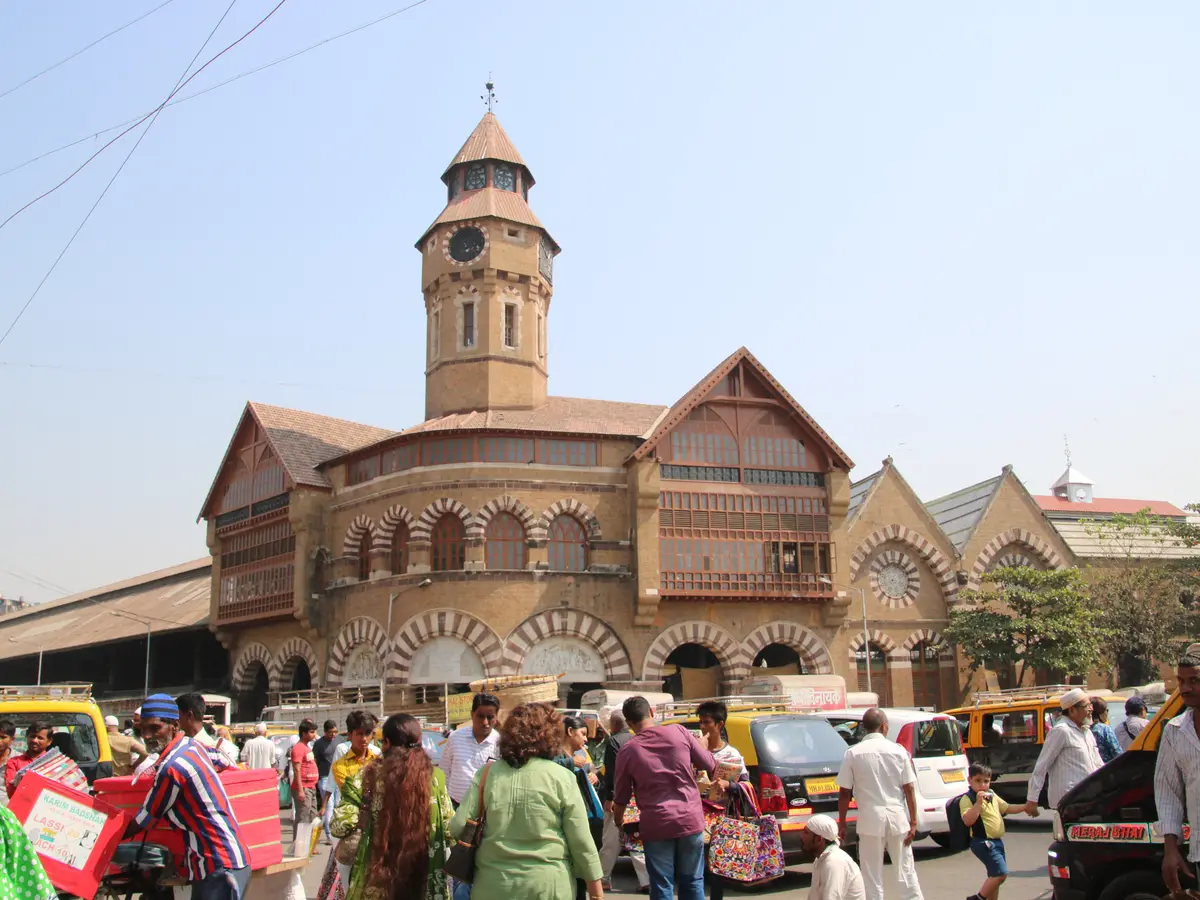 Crawford Marketabout 10 kmChhatrapati Shivaji Maharaj Terminusabout 10 km
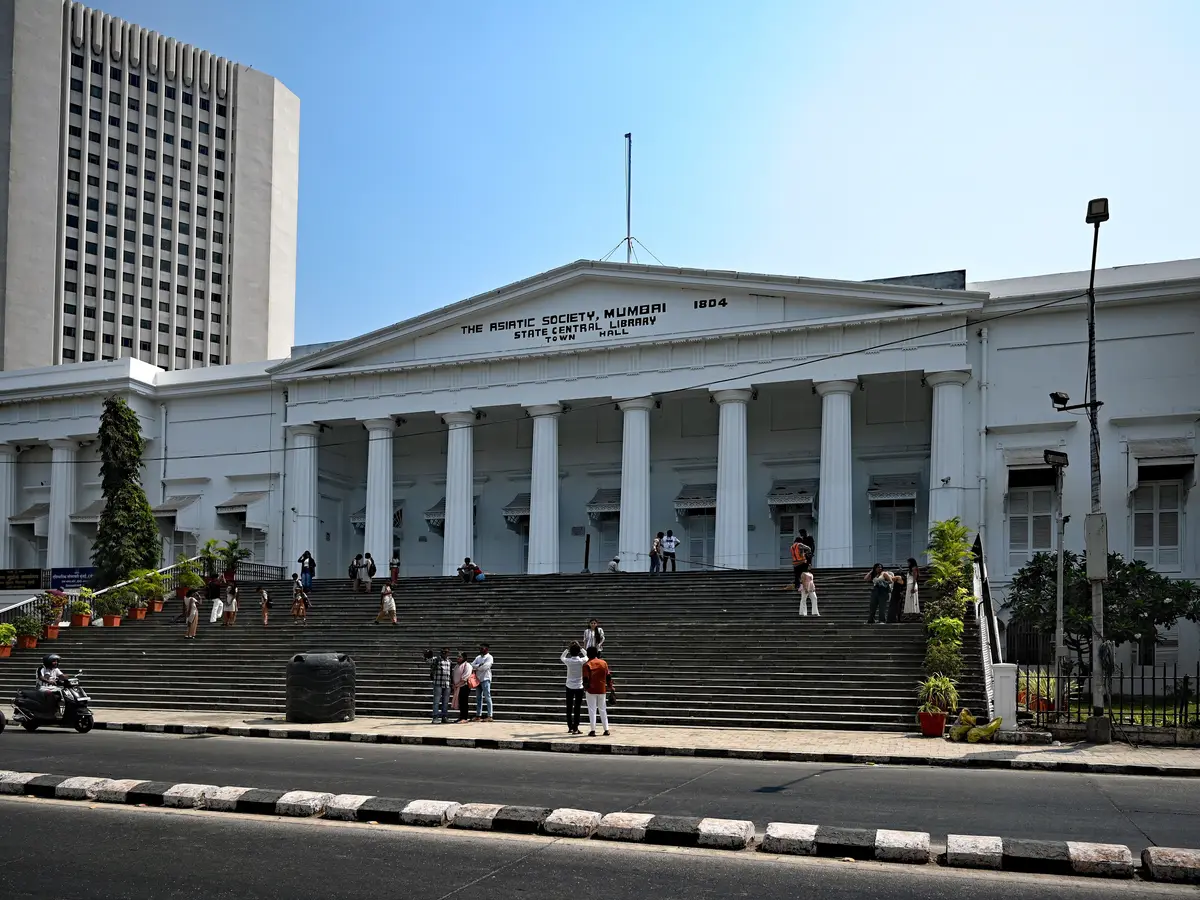 The Asiatic Society and the Town Hallabout 11 kmMumba Devi Templeabout 11 km
Elephanta Caves: common questions
How long do you need at Elephanta Caves?
About 4–5 hours including the boat
What are the opening hours of Elephanta Caves?
The caves are closed on Mondays. Boats run from the morning and the last one back leaves in the late afternoon; the times change, so check at the jetty on the day. Mondays. Sailings depend on the weather and the sea, and are much reduced through the monsoon months, roughly June to August.
Is there an admission fee at Elephanta Caves?
Separate charges for the boat and for the site; check at the jetty and the ticket counter.
How far is Elephanta Caves from the Mumbai cruise port?
It is about 10 km from the Mumbai cruise port in a straight line. The road is longer, and the drive depends on traffic.
How much walking is there at Elephanta Caves?
A kilometre of gentle slope from the pier, then about 120 steep stone steps. The toy train covers part of the flat stretch when it is running.
From people who went
Nobody has written here yet. If you go, leave a line — the next ship reads it.
This place has the writing but not the recording.