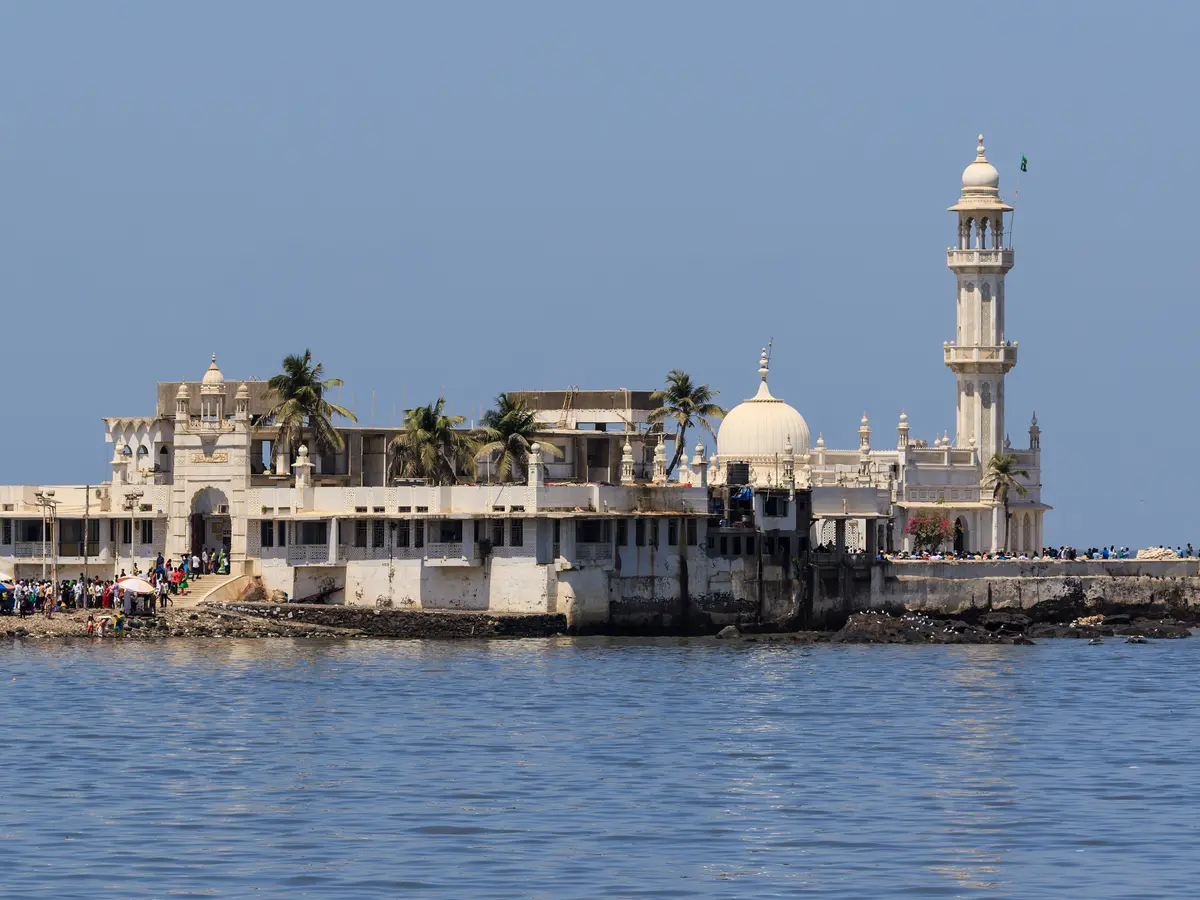
A Sufi shrine on a bay islet, reached on foot when the tide allows.
The walk out across the water is the thing, and it is free and takes an hour. It depends entirely on the tide, so it is a place to check before you commit the taxi, not after.
- Time needed
- About 45–60 min
- Opening hours
- The causeway floods at high tide, so when you can walk out depends on the sea rather than on opening hours. Check the tide before setting out.
- Admission
- A working shrine, free to enter. Dress covering shoulders and knees; heads are covered in the shrine, and there are separate prayer rooms for women and men.
- From the Mumbai cruise port
- about 7 kmStraight line; the road is longer.
At a glance
- A Sufi shrine on an islet in the bay, reached by a causeway of about half a kilometre
- The tomb of Pir Haji Ali Shah Bukhari, a merchant and saint from Bukhara, linked to the Chishti order
- The legend: he asked that his shroud be given to the sea and that he be buried where it came to rest
- Usually dated to 1431, though the present marble building is much later
- A whitewashed shrine in a marble courtyard, with a dome and a minaret above it
- Mirror work in the main hall spelling out the ninety-nine names of God in Arabic
- Women were barred from the inner sanctum from June 2012; the Bombay High Court ruled against the bar on 26 August 2016 and the trust undertook in the Supreme Court that October to admit women, who entered on 29 November that year
About Haji Ali Dargah
Haji Ali Dargah stands on a small islet off the Worli shore, joined to the city at Mahalaxmi by a causeway of about half a kilometre. The causeway is level and has no railing, and it goes under water at high tide, so whether you can walk out is decided by the sea.
The shrine holds the tomb of Pir Haji Ali Shah Bukhari, a wealthy merchant from Bukhara, in present-day Uzbekistan, who gave up his trade, travelled, and is associated with the Chishti Sufi order. The story told here is that before he died he asked not to be buried in a graveyard: his shroud was to be given to the sea, and he was to be buried wherever it came to rest. It is said to have settled on a rock in the bay, and the shrine was built there. The dargah is usually dated to 1431, although what you walk into now is much later work: it was extensively renovated in 1960 and 1964, and from 2008 a long structural rebuilding in white Makrana marble, the stone of the Taj Mahal, has been under way in phases.
Inside the courtyard the shrine is whitewashed, under a dome, with a minaret beside it. The tomb itself is covered with a red and green cloth, set in a silver frame on marble pillars, and the main hall carries mirror work that spells out the ninety-nine names of God in Arabic. There are separate prayer rooms for women and men.
One piece of recent history belongs to the place. Women had been barred from the inner sanctum since June 2012. On 26 August 2016 the Bombay High Court ruled that the bar could not stand, but the order was stayed while the shrine trust appealed. In the Supreme Court that October the trust undertook to admit women on the same terms as men and asked for a few weeks to make the changes, and women entered on 29 November.
Visiting Haji Ali Dargah
Good to know
Places near Haji Ali Dargah
 Mahalaxmi Dhobi Ghatabout 2 km
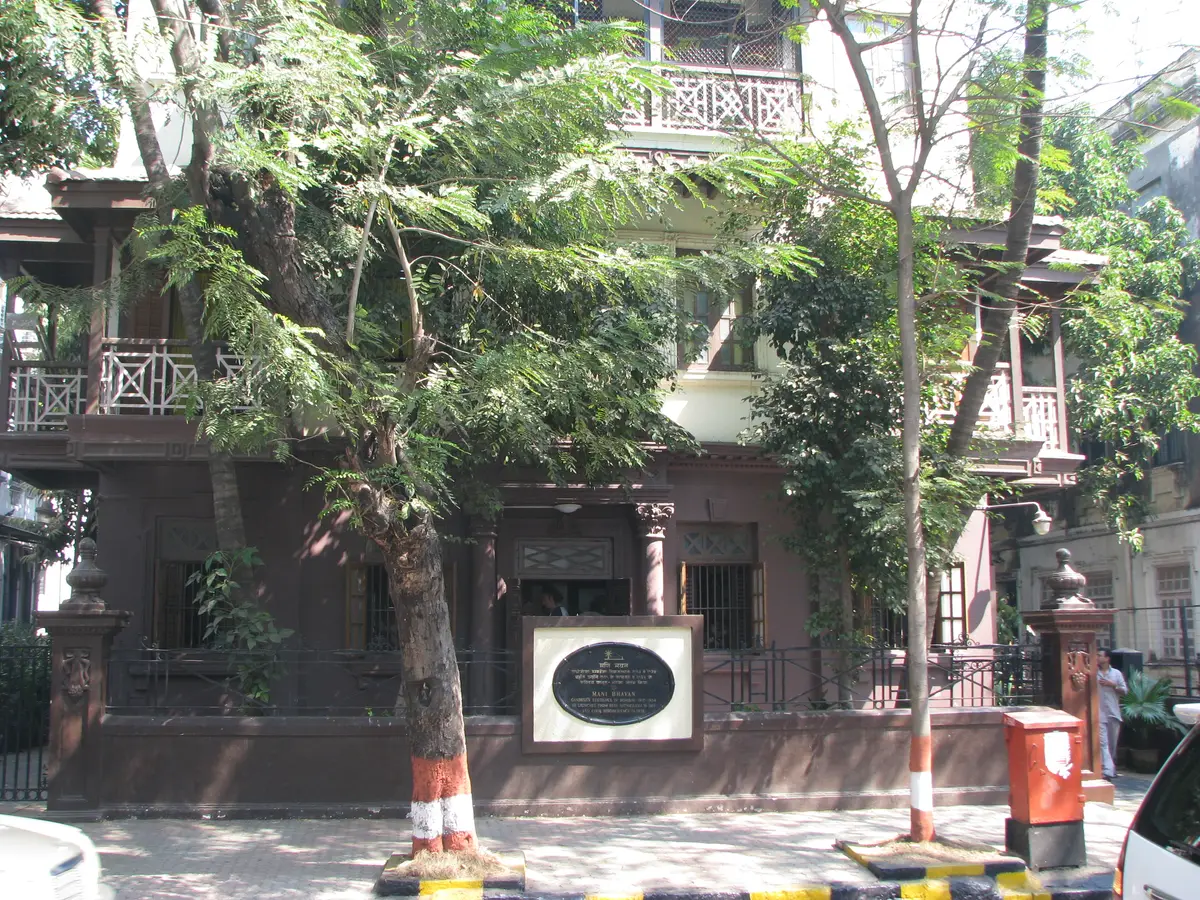 Mani Bhavanabout 3 km
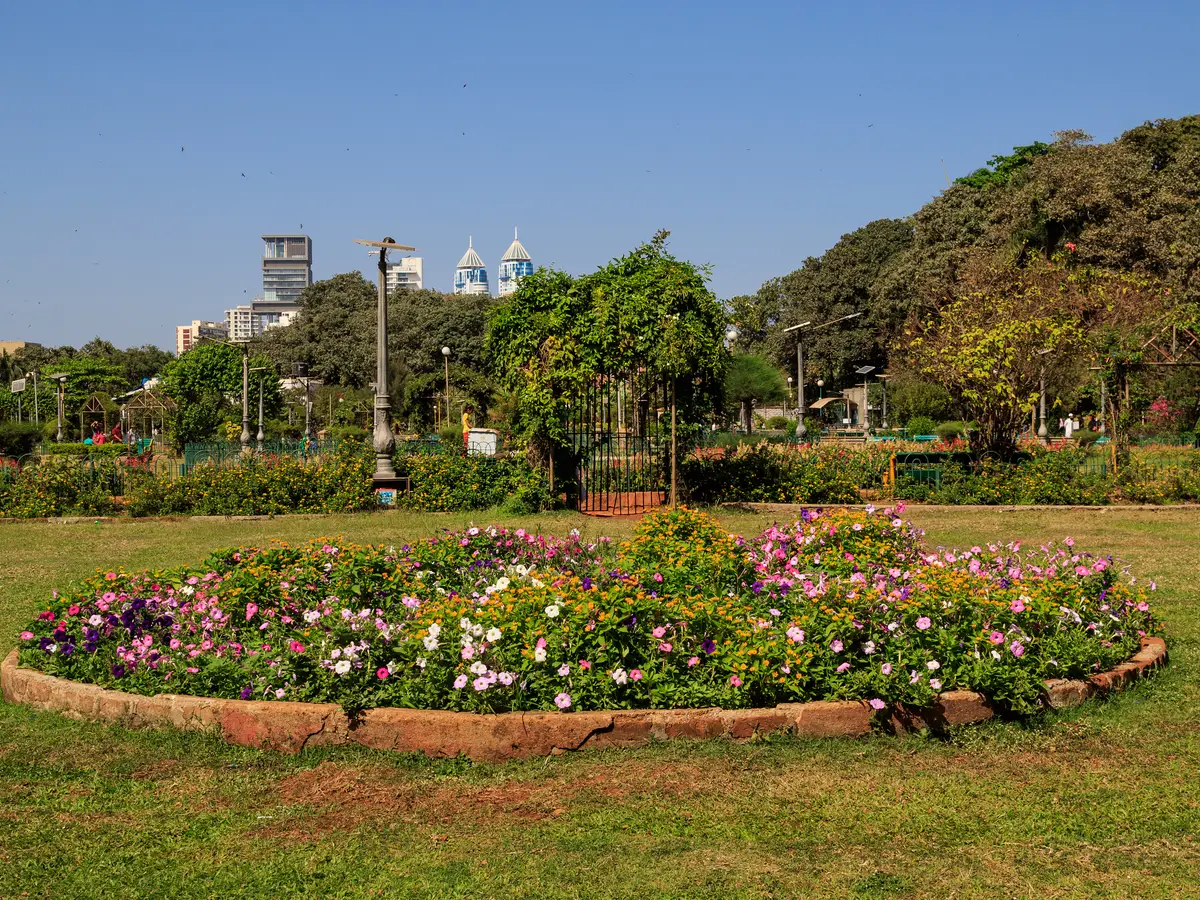 Hanging Gardens (Pherozeshah Mehta Gardens)about 3 kmMumba Devi Templeabout 4 km
Haji Ali Dargah: common questions
How long do you need at Haji Ali Dargah?
About 45–60 min
What are the opening hours of Haji Ali Dargah?
The causeway floods at high tide, so when you can walk out depends on the sea rather than on opening hours. Check the tide before setting out. Access is cut off at high tide. Fridays and festival days are very crowded.
Is there an admission fee at Haji Ali Dargah?
A working shrine, free to enter. Dress covering shoulders and knees; heads are covered in the shrine, and there are separate prayer rooms for women and men.
How far is Haji Ali Dargah from the Mumbai cruise port?
It is about 7 km from the Mumbai cruise port in a straight line. The road is longer, and the drive depends on traffic.
How much walking is there at Haji Ali Dargah?
A level causeway of about half a kilometre with no railing, wet and slippery near high water, then a flat marble courtyard. Shoes come off before the shrine.
From people who went
Nobody has written here yet. If you go, leave a line — the next ship reads it.
This place has the writing but not the recording.