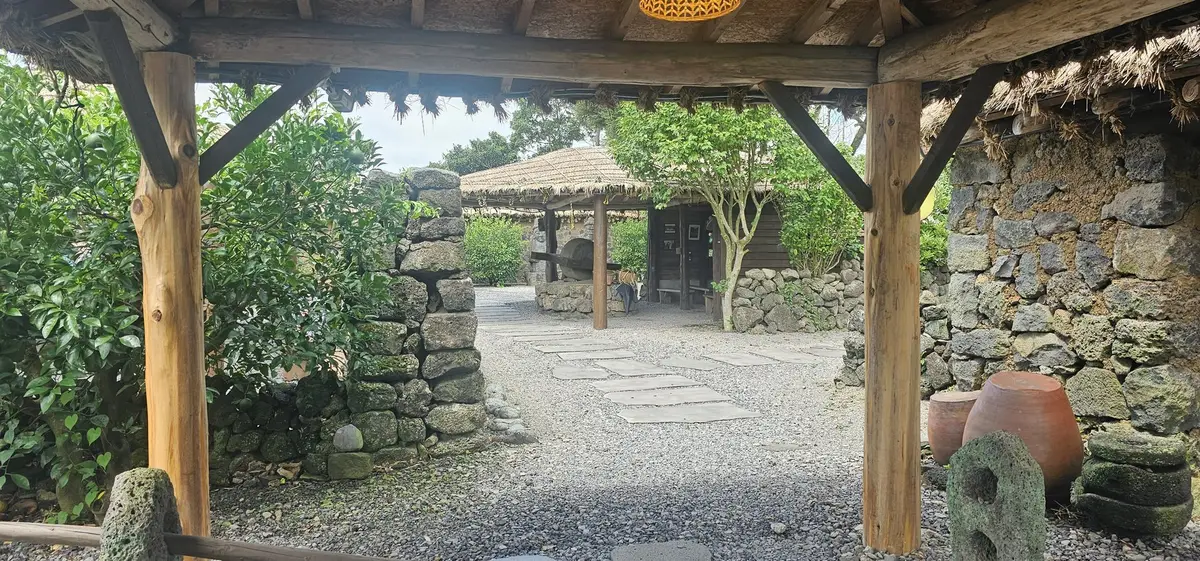
See a lived-in Jeju village with traditional houses and stone walls.
Explore a living Jeju village with traditional houses, stone lanes and protected heritage trees.
- Time needed
- 60 min
- Opening hours
- No fixed daily opening hours are published for the village streets; cultural guide schedules are separate and may change.
- Admission
- VisitJeju states the cultural-tour commentary is free and lasts about 60 minutes per session. The cited page does not state a village-wide admission fee; confirm other current tour terms with the village office.
- From the Jeju cruise port
- about 29 kmStraight line; the road is longer.
At a glance
- A lived in Joseon era walled town founded in 1423 under King Sejong as Jeongui hyeon, a county seat for nearly 500 years until 1914
- About 110 traditional structures within the old eupseong wall line, designated National Folklore Cultural Heritage No. 188 (1984)
- A roughly 1,000 year old zelkova and six hackberry trees (originally seven) jointly designated Natural Monument No. 161 (1964)
- Historical scars remain from an 1826 fire that destroyed about 80 buildings, and from 1948 Jeju Uprising damage
- Filming location for the historical drama Dae Jang Geum (MBC, 2003 to 2004)
- A living village of roughly 250 households, not a staged folk park, so respect private homes
- Omegisul, a family brewed Jeju rice liquor, is a local specialty, though a tasting or demonstration is not guaranteed on every visit
- Free admission to the village, cultural guide sessions of about 60 minutes run on a separate, bookable schedule
About Seongeup Folk Village
Seongeup Folk Village is a lived in Joseon era walled town in Pyoseon myeon, founded in 1423 under King Sejong as Jeongui hyeon, one of Jejus three local administrative seats. It served as a county administrative center for nearly 500 years, until 1914, and today keeps about 110 traditional structures inside its old eupseong wall line, laid out on the geomantic principles typical of a Joseon county seat. The village is designated Important Folklore Cultural Heritage, National Folklore Cultural Heritage No. 188 from 1984, with several individual buildings carrying separate heritage status.
Near Ilgwanheon, in the village center, a roughly 1,000 year old zelkova tree and six hackberry trees (originally seven, until a storm destroyed one in 1973) are jointly designated Natural Monument No. 161, dating to 1964. Some of the hackberry trees have since been reinforced and treated to protect them. The village also carries visible historical scars: a fire in 1826 destroyed about 80 buildings, and it suffered fire damage again during the 1948 Jeju Uprising. The historical drama Dae Jang Geum (MBC, 2003 to 2004) was filmed here.
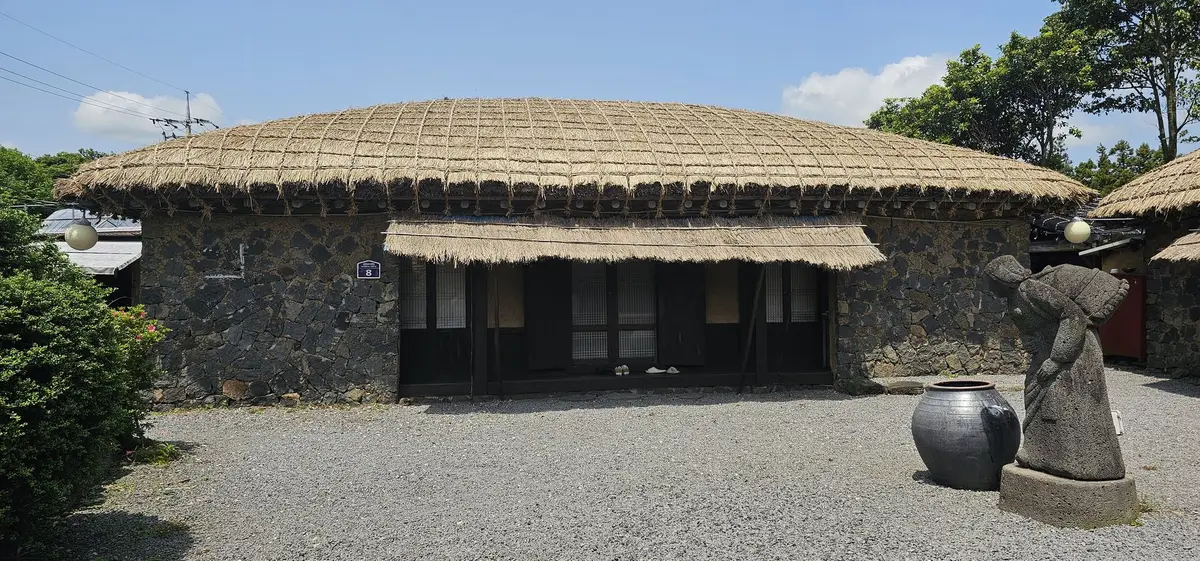
Seongeup is not a staged museum village. Residents still live in many of its roughly 110 homes, maintaining stone walls, thatched roofs and household traditions, including the brewing of Omegisul, a rice based Jeju liquor passed down in local families. Whether a free tasting or demonstration is offered depends on the day and the operator, so confirm current terms before counting on one. VisitJeju lists the village as open year round, but publishes no single daily opening window for all village streets, and gives separate, dated hours for its cultural guide service, about 60 minutes per session, reserved through the village guide office at 064-710-6810 or 064-710-6797. Visiting means walking inhabited stone lanes on uneven historic surfaces, so visitors should respect private homes and stay on public paths.
Visiting Seongeup Folk Village
Good to know
Seongeup Folk Village in photographs
Places near Seongeup Folk Village
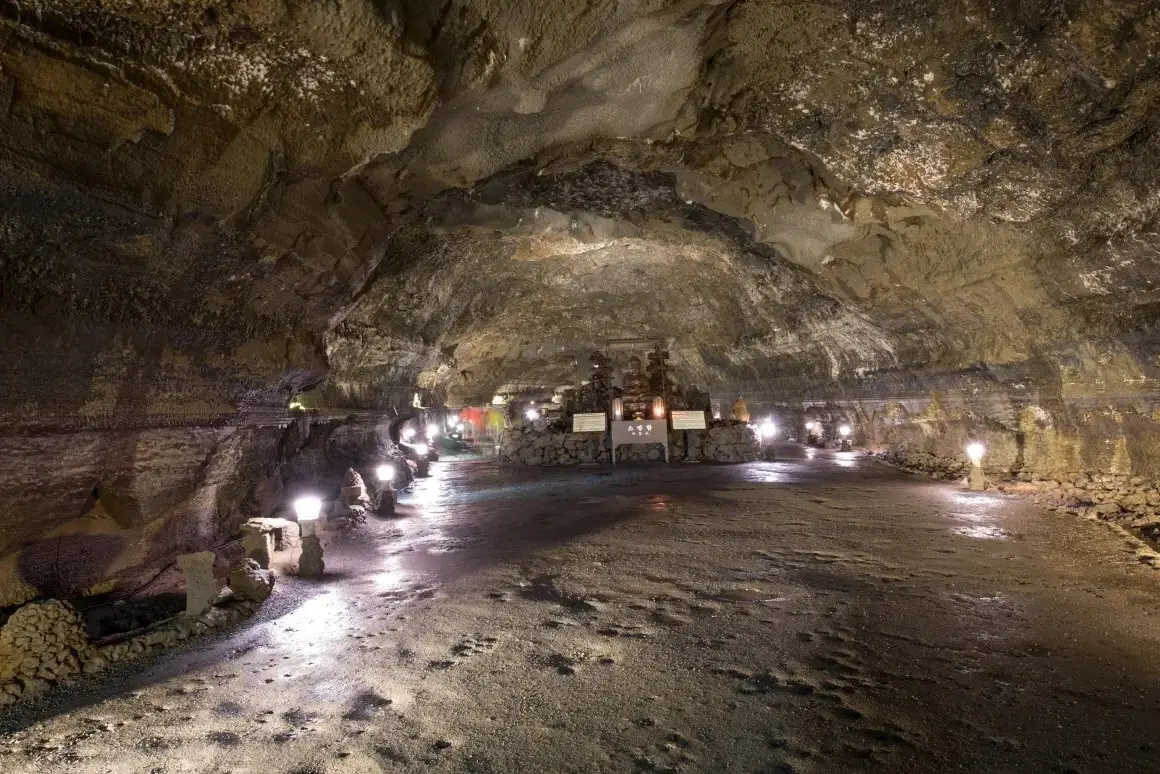 Ilchul Land (Micheon Cave Lava Tube)about 4 km
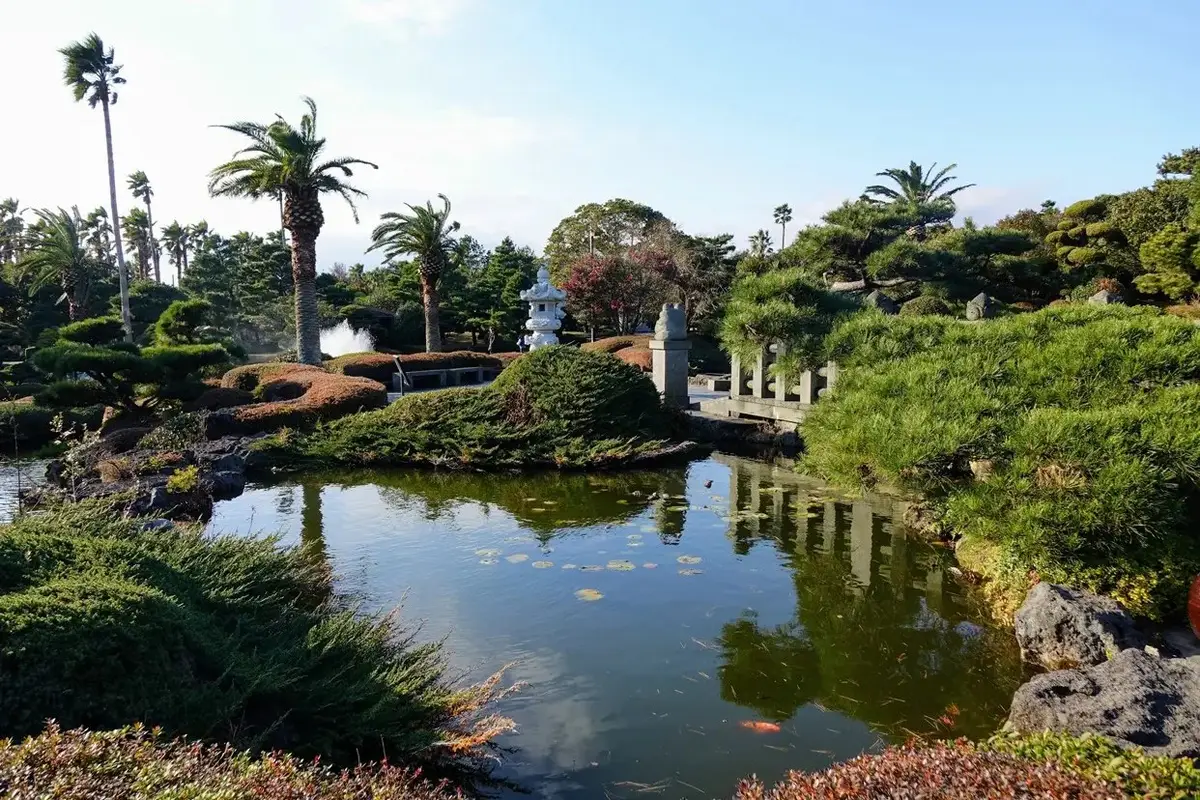 Ilchul Land Themed Gardensabout 4 km
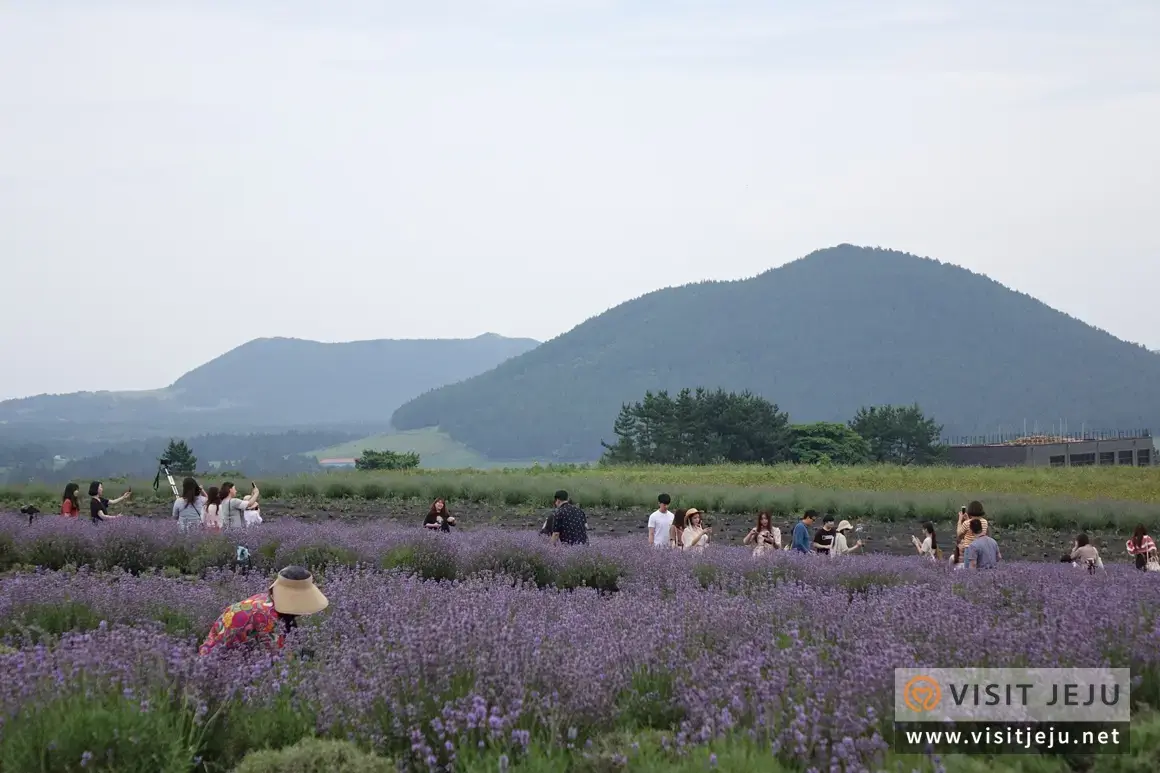 Boromwatabout 5 km
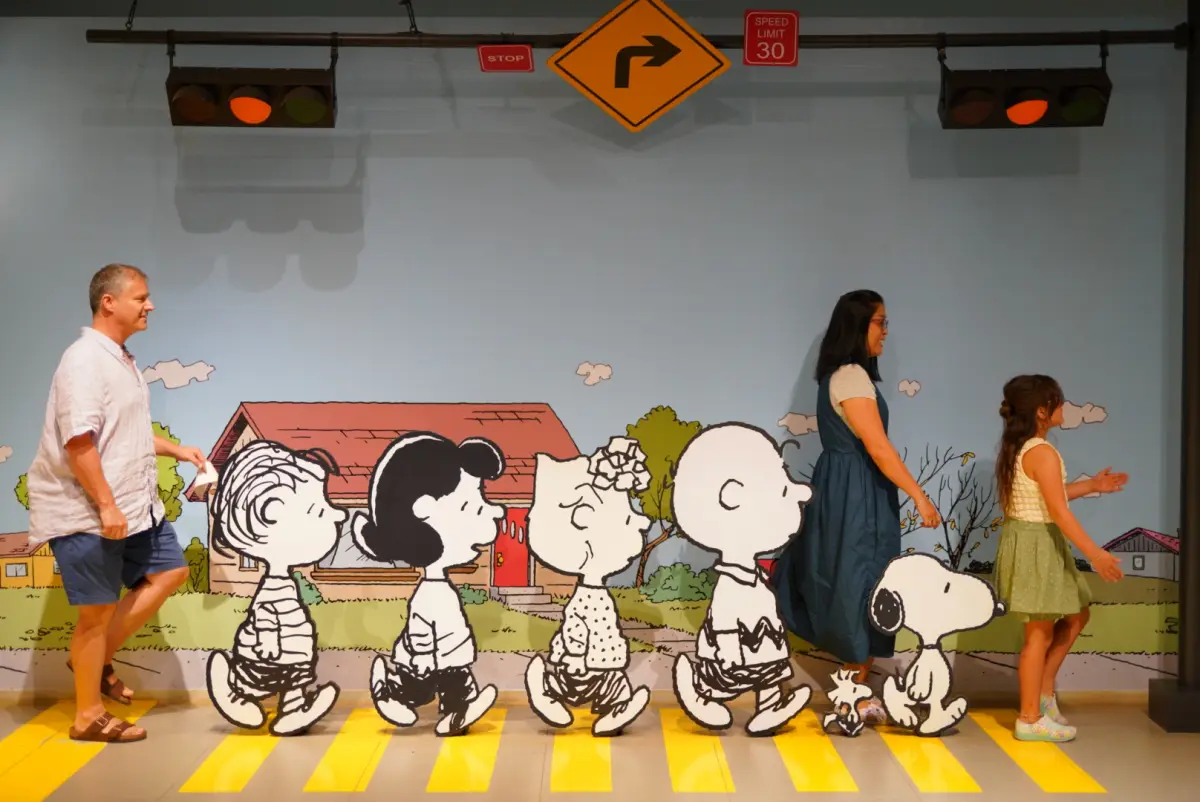 Snoopy Gardenabout 7 km
Seongeup Folk Village: common questions
How long do you need at Seongeup Folk Village?
60 min
What are the opening hours of Seongeup Folk Village?
No fixed daily opening hours are published for the village streets; cultural guide schedules are separate and may change. Village listed year-round; individual homes, guides and experiences may follow separate schedules
Is there an admission fee at Seongeup Folk Village?
VisitJeju states the cultural-tour commentary is free and lasts about 60 minutes per session. The cited page does not state a village-wide admission fee; confirm other current tour terms with the village office.
How far is Seongeup Folk Village from the Jeju cruise port?
It is about 29 km from the Jeju cruise port in a straight line. The road is longer, and the drive depends on traffic.
How much walking is there at Seongeup Folk Village?
Walk through inhabited stone lanes; respect private homes and uneven historic surfaces
From people who went
Nobody has written here yet. If you go, leave a line — the next ship reads it.
This place is recorded in 10 languages. On tour it plays itself when you arrive.
Open in Maps