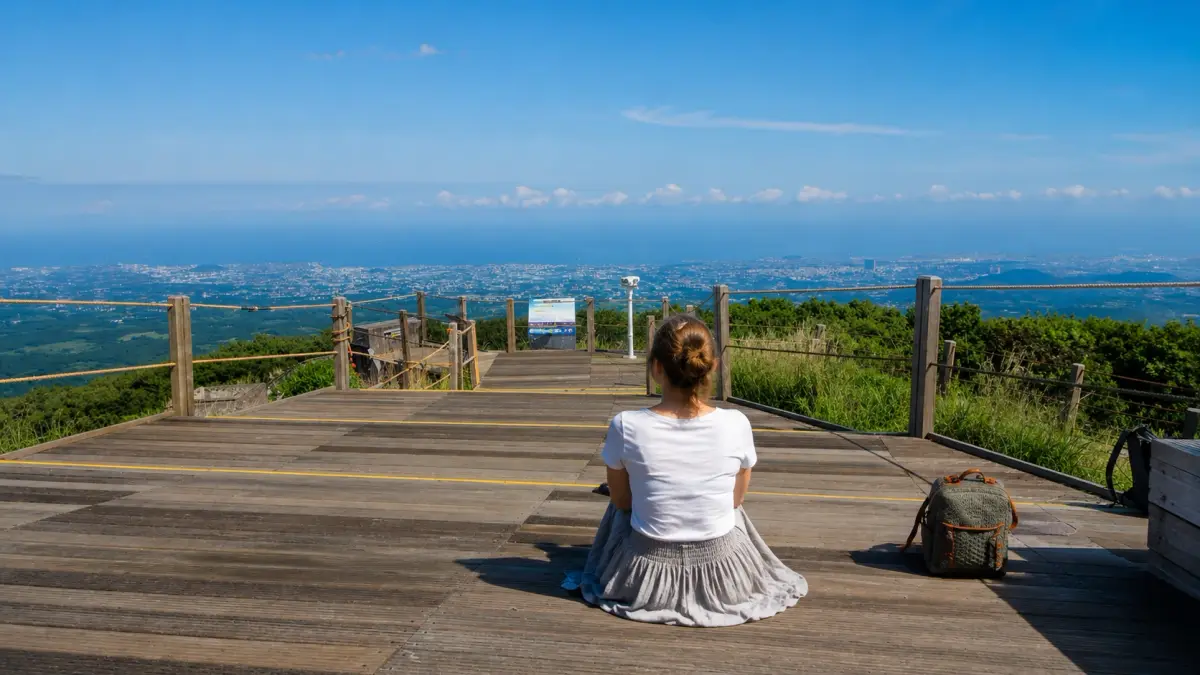
Climb a short Hallasan side trail to a panoramic oreum summit.
This short trail from Eorimok offers forest and Hallasan views without a full-day summit hike. Allow about an hour for the return walk; trail entry is free, parking is paid, and weather can restrict access.
- Time needed
- 75 min
- Opening hours
- Seasonal park entry starts at 06:00 (Nov–Feb), 05:30 (Mar–Apr and Sep–Oct), or 05:00 (May–Aug). The official reservation guide currently displays conflicting Eoseungsaengak last-entry tables; check the live trail-control notice on the visit day.
- Admission
- Free trail entry; no reservation is required for Eoseungsaengak.
- From the Jeju cruise port
- about 15 kmStraight line; the road is longer.
At a glance
- Oreum (parasitic cone) on Hallasans flank, 1,169 m, reached from the Eorimok Visitor Center
- Part of a UNESCO World Heritage property (inscribed 2007) and inside a UNESCO Biosphere Reserve (2002), Hallasan became a national park in 1970
- 1.3 km one way, about 200 m elevation gain, wide steps and boardwalk, round trip about 60 to 75 minutes
- No reservation needed, unlike the Seongpanak and Gwaneumsa summit routes, which are capped and reservation-only
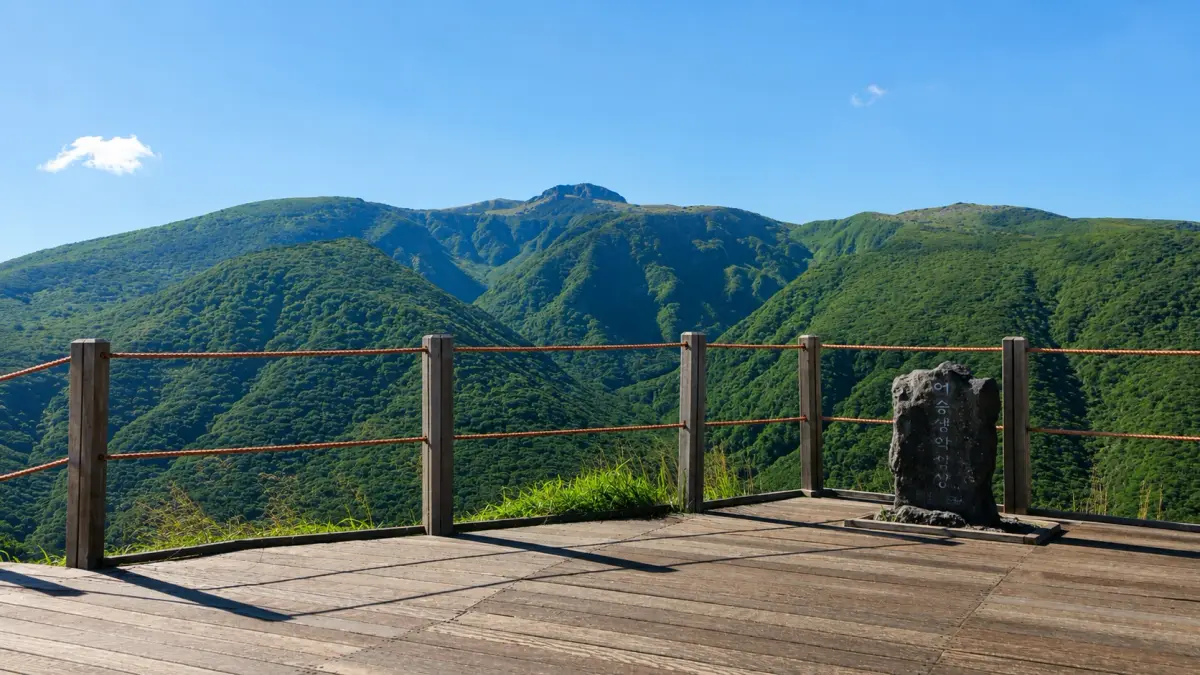
- Deck views toward Hallasans upper slopes and, on clear days, the Baengnokdam crater and the oreum field below
- Botanical transition zone where Korean fir, Abies koreana, an IUCN Endangered species, begins
- Hallasan holds over 2,000 plant species, about half of the Korean Peninsulas flora
- A 1945 Imperial Japanese tochika, a concrete pillbox, survives at the summit
- Free trail entry, Eorimok parking charged by vehicle class
- Mountain weather changes quickly, closures possible for snow, fog, or high winds, common November to March
About Hallasan Eoseungsaengak Trail
Eoseungsaengak (1,169 m) is a volcanic cone, an oreum, on Hallasans western flank, reached from the Eorimok Visitor Center. Hallasan is Korea highest peak, and its Natural Reserve is part of the UNESCO World Heritage property Jeju Volcanic Island and Lava Tubes, inscribed 2007. Jeju Island was separately designated a UNESCO Biosphere Reserve in 2002, and Hallasan itself became a national park in 1970 (national park and natural monument are separate Korean legal designations). The trail climbs only about 200 m over 1.3 km of wide steps and boardwalk to a summit deck, a round trip of roughly 60 to 75 minutes that gives a taste of Hallasan without the full-day Baengnokdam summit hike. The Seongpanak and Gwaneumsa summit routes require advance reservation and have daily visitor caps, while Eoseungsaengak does not. On clear days the deck looks out over Hallasans upper slopes and, in the distance, the Baengnokdam crater, along with the oreum field below and views toward the coast. This elevation band, roughly 1,000 to 1,300 m, is also a botanical transition zone, where deciduous broadleaf forest gives way to Korean fir, Abies koreana, an IUCN Endangered species endemic to South Koreas high mountains. Hallasan hosts over 2,000 plant species in total, roughly half of all plants found on the Korean Peninsula. A 1945 Imperial Japanese tochika, a concrete pillbox, remains at the summit, one of the highest-altitude surviving Japanese military structures from the colonial era in Korea. Trail entry is free, and Eorimok parking is charged by vehicle class. Mountain weather changes quickly, with snow, fog, or high winds common from November to March, so bring a layer and check conditions before setting out.
Visiting Hallasan Eoseungsaengak Trail
Good to know
Hallasan Eoseungsaengak Trail in photographs
Places near Hallasan Eoseungsaengak Trail
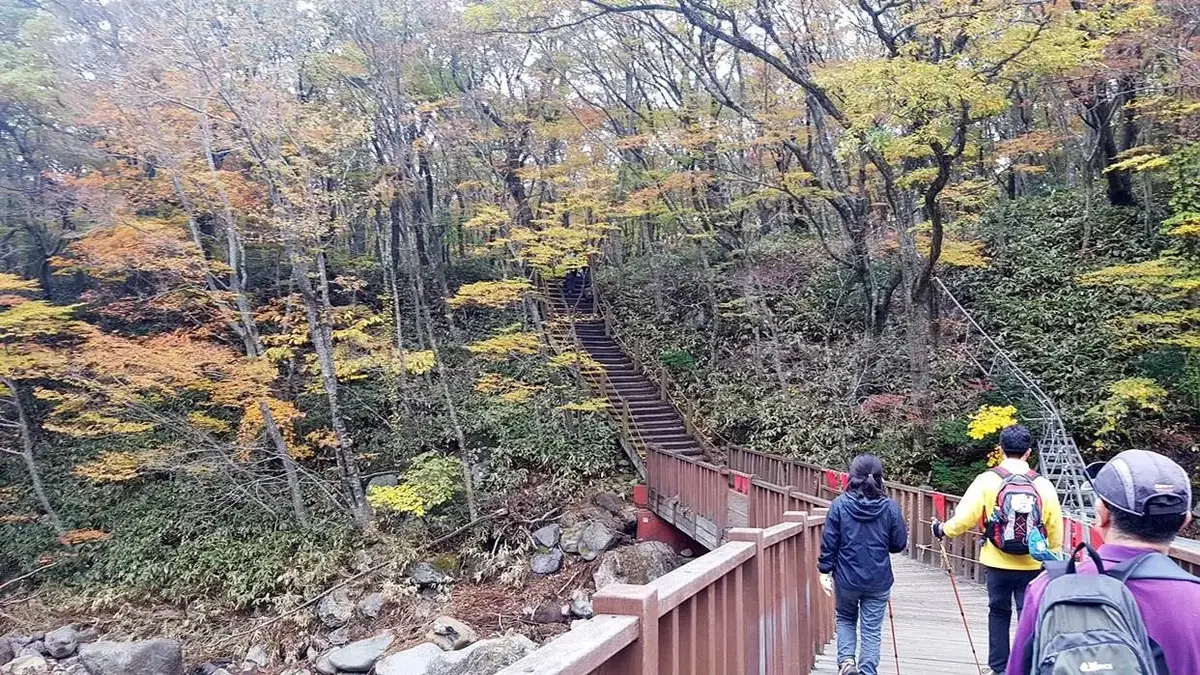 Eorimok Trail (Hallasan)under 1 km
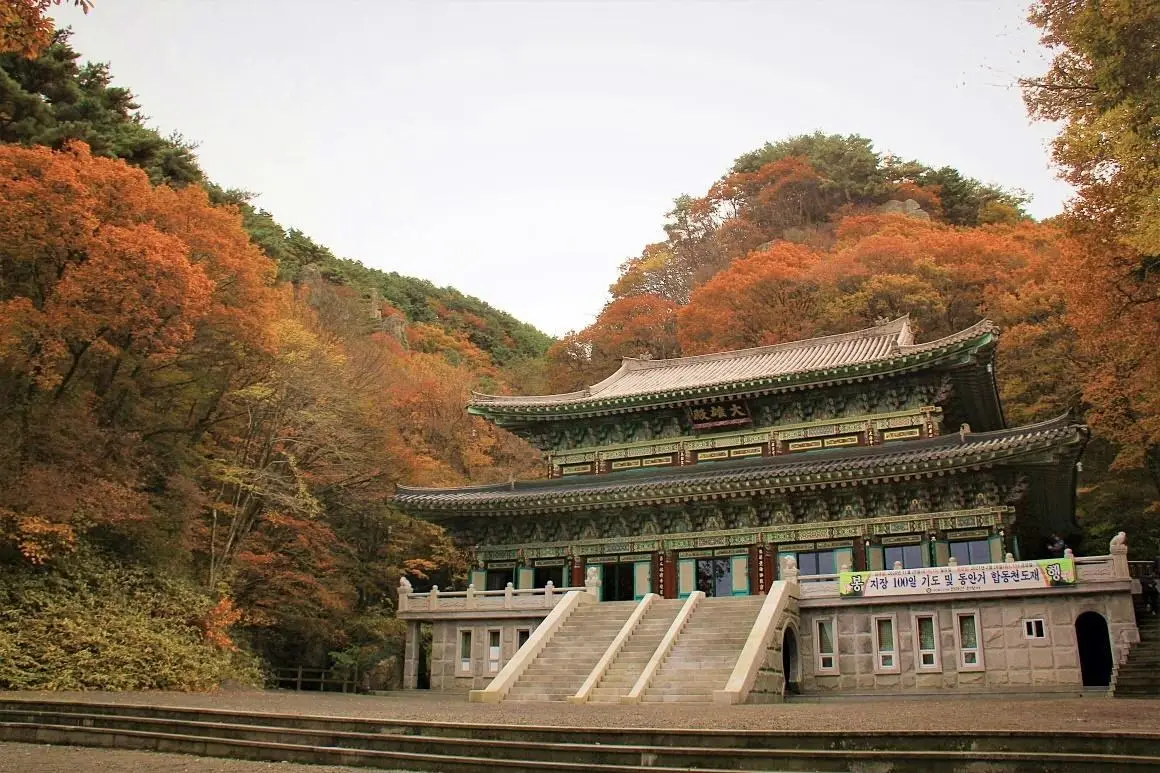 Cheonwangsa Templeabout 2 km
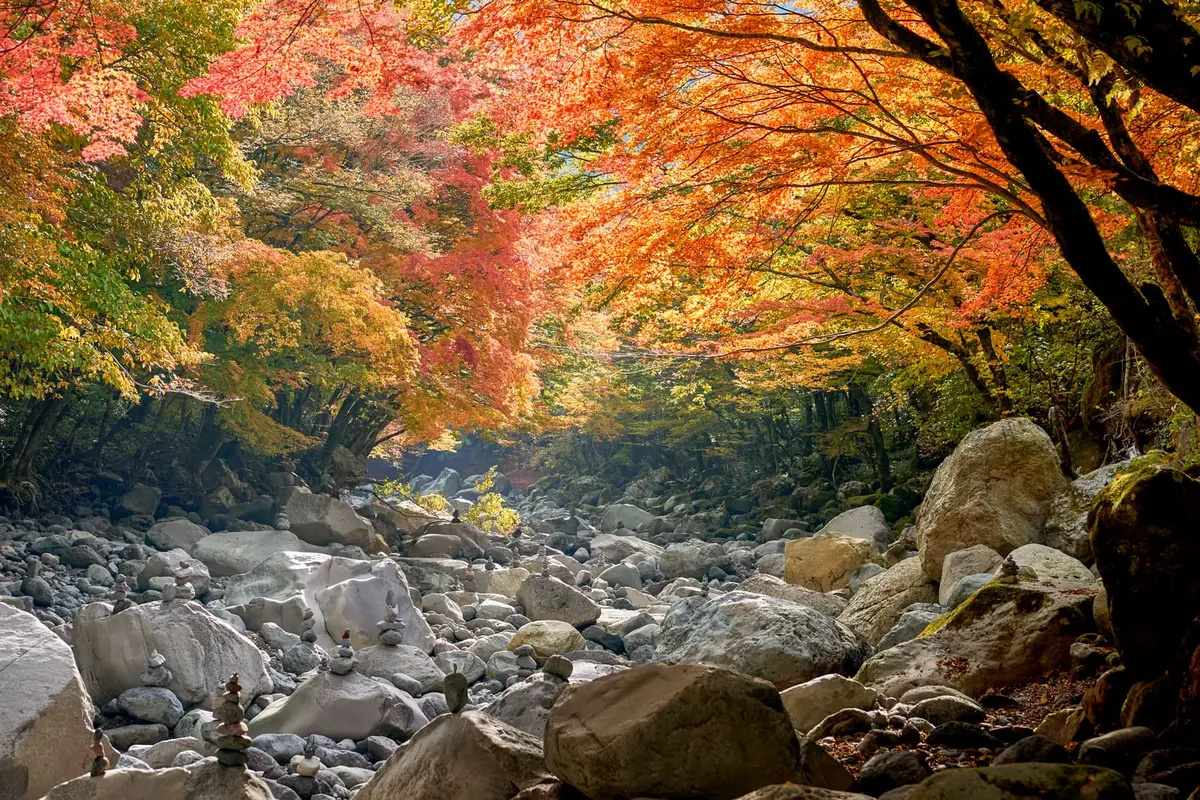 Cheona Valleyabout 3 km
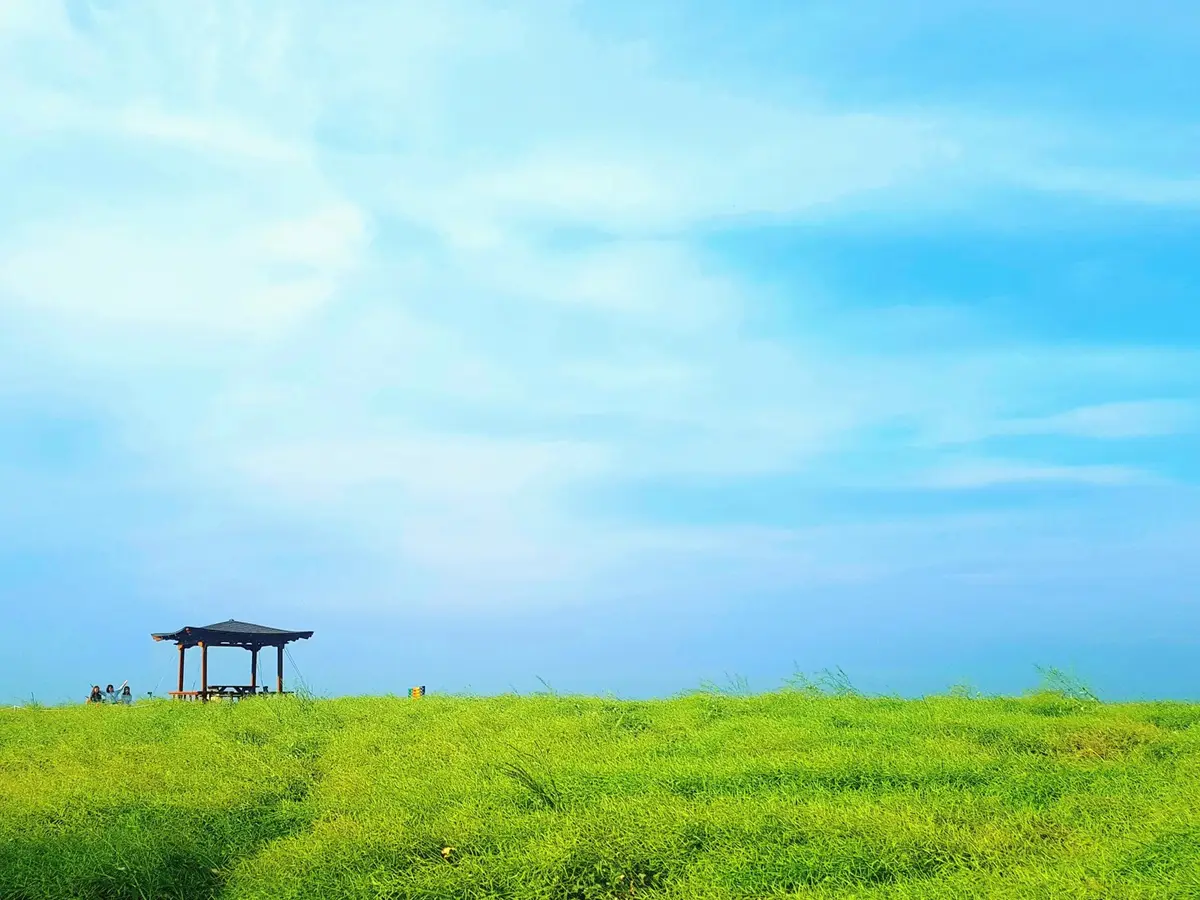 Ora-dong Barley & Buckwheat Fieldabout 4 km
Hallasan Eoseungsaengak Trail: common questions
How long do you need at Hallasan Eoseungsaengak Trail?
75 min
What are the opening hours of Hallasan Eoseungsaengak Trail?
Seasonal park entry starts at 06:00 (Nov–Feb), 05:30 (Mar–Apr and Sep–Oct), or 05:00 (May–Aug). The official reservation guide currently displays conflicting Eoseungsaengak last-entry tables; check the live trail-control notice on the visit day. No regular weekly closure; the national park may close trails for severe weather or safety.
Is there an admission fee at Hallasan Eoseungsaengak Trail?
Free trail entry; no reservation is required for Eoseungsaengak.
How far is Hallasan Eoseungsaengak Trail from the Jeju cruise port?
It is about 15 km from the Jeju cruise port in a straight line. The road is longer, and the drive depends on traffic.
How much walking is there at Hallasan Eoseungsaengak Trail?
About 1.3 km each way with an uphill woodland trail; allow roughly 1 hour return.
From people who went
Nobody has written here yet. If you go, leave a line — the next ship reads it.
This place is recorded in 10 languages. On tour it plays itself when you arrive.
Open in Maps