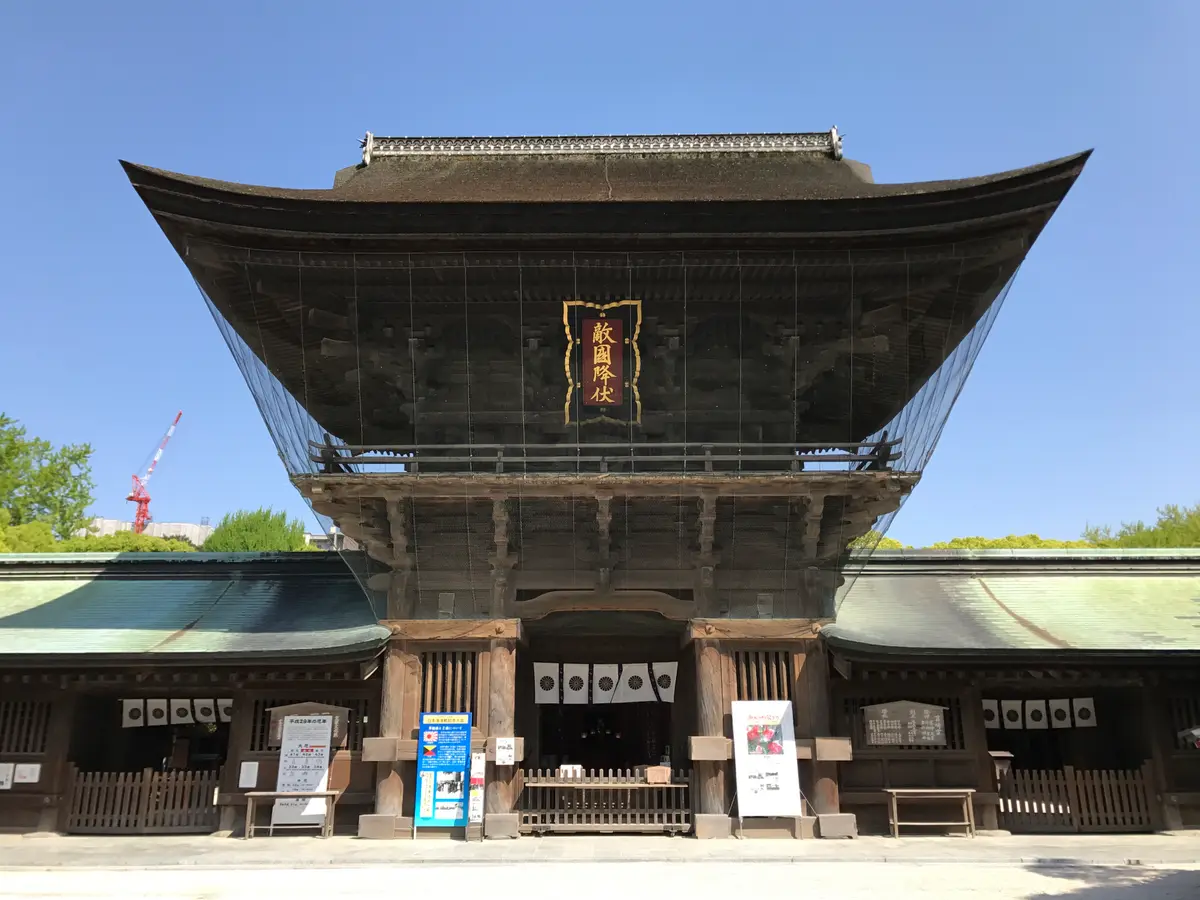
A great Hachiman shrine near the port, tied to the Mongol invasions.
The nearest major sight to the cruise berth, and one most visitors miss. A straight approach from the sea, a gate from 1594, and a famous four-character plaque.
- Time needed
- About 30 min
- Opening hours
- Hours change by season and by event. Check the official page on the day you go.
- Admission
- The shrine grounds are open to walk into. Seasonal flower gardens on the site are ticketed; check on the day.
- From the Fukuoka (Hakata) cruise port
- about 2 kmStraight line; the road is longer.
At a glance
- Founded in 921 by the shrine's own account, and moved to this site in 923
- Usually counted among Japan's three great Hachiman shrines
- The tower gate was built in 1594 by Kobayakawa Takakage
- On the gate hangs a plaque reading Tekikoku Kofuku, a prayer for the enemy's surrender
- The main hall and worship hall were rebuilt in 1546 by Ouchi Yoshitaka
- Burned in the first Mongol invasion of 1274 and rebuilt afterwards
About Hakozaki Shrine
Hakozaki Shrine stands close to the shore of Hakata Bay, with its approach running in a straight line from the sea. By the shrine's own account it was founded in 921 and moved to this site in 923. It is dedicated to Hachiman, a deity identified with Emperor Ojin, together with his mother Empress Jingu and Tamayori-hime. It is usually counted with Usa and Iwashimizu as one of the three great Hachiman shrines of Japan.
The shrine's history is tied to the Mongol invasions. When the first invasion fleet landed on this coast in November 1274, the shrine was burned to the ground. The plaque that hangs on the tower gate today comes out of that story. Its four characters read Tekikoku Kofuku, a prayer that the enemy nation should submit, and tradition links it to the prayers of the retired emperor Kameyama during the invasions.
The gate itself was built in 1594 by the lord Kobayakawa Takakage. Behind it, the main hall and the worship hall were rebuilt in 1546 by Ouchi Yoshitaka. All three are Important Cultural Properties, as is the stone torii on the approach, which dates from 1609.
Beside the gate, inside a red fence, grows the Hakomatsu, the box pine. The story is that a box was buried here at the birth of Emperor Ojin and the pine planted to mark the spot; that box, hako, is in the shrine's name.
Two festivals fill the grounds: the Tamaseseri on 3 January, when men compete for a wooden ball, and the Hojoya from 12 to 18 September, one of Hakata's three great festivals.
Visiting Hakozaki Shrine
Good to know
Places near Hakozaki Shrine
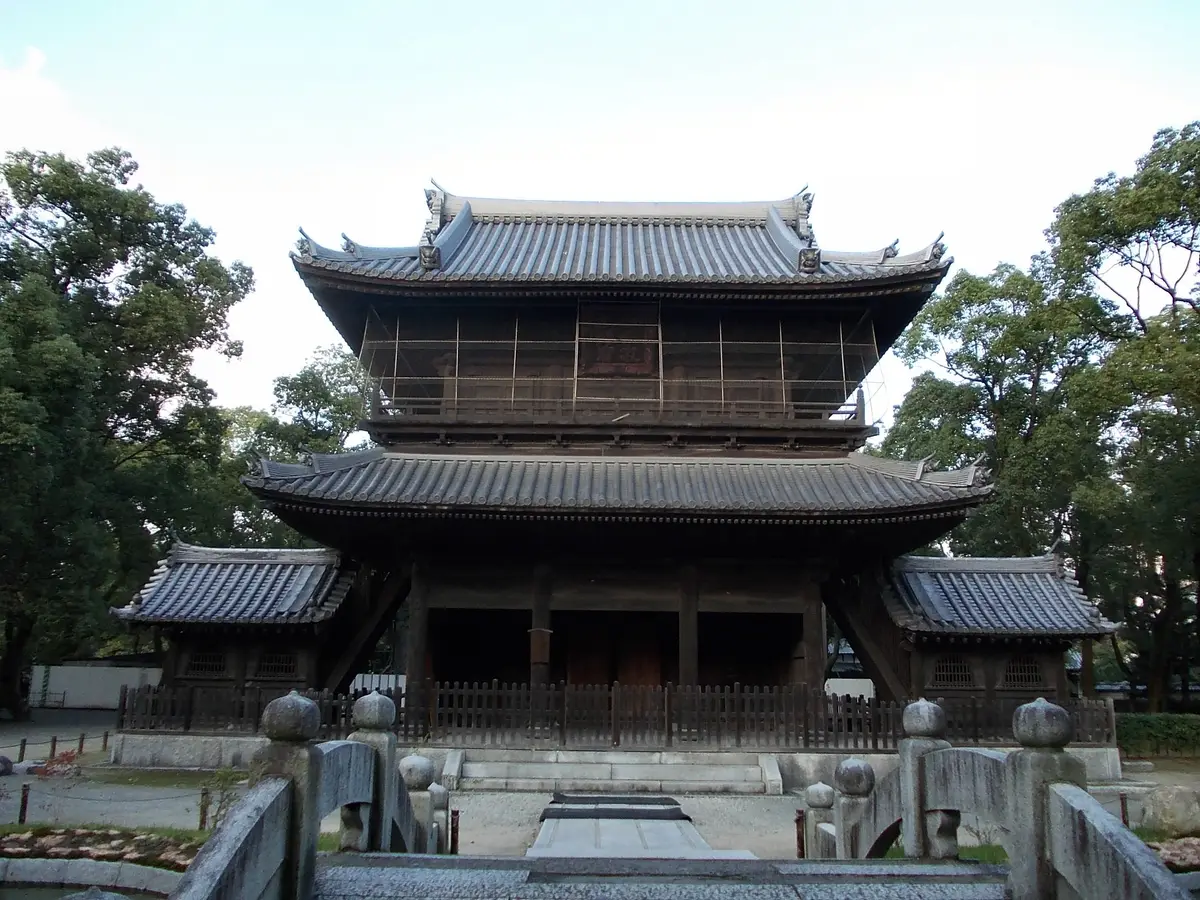 Shofukuji Templeabout 2 km
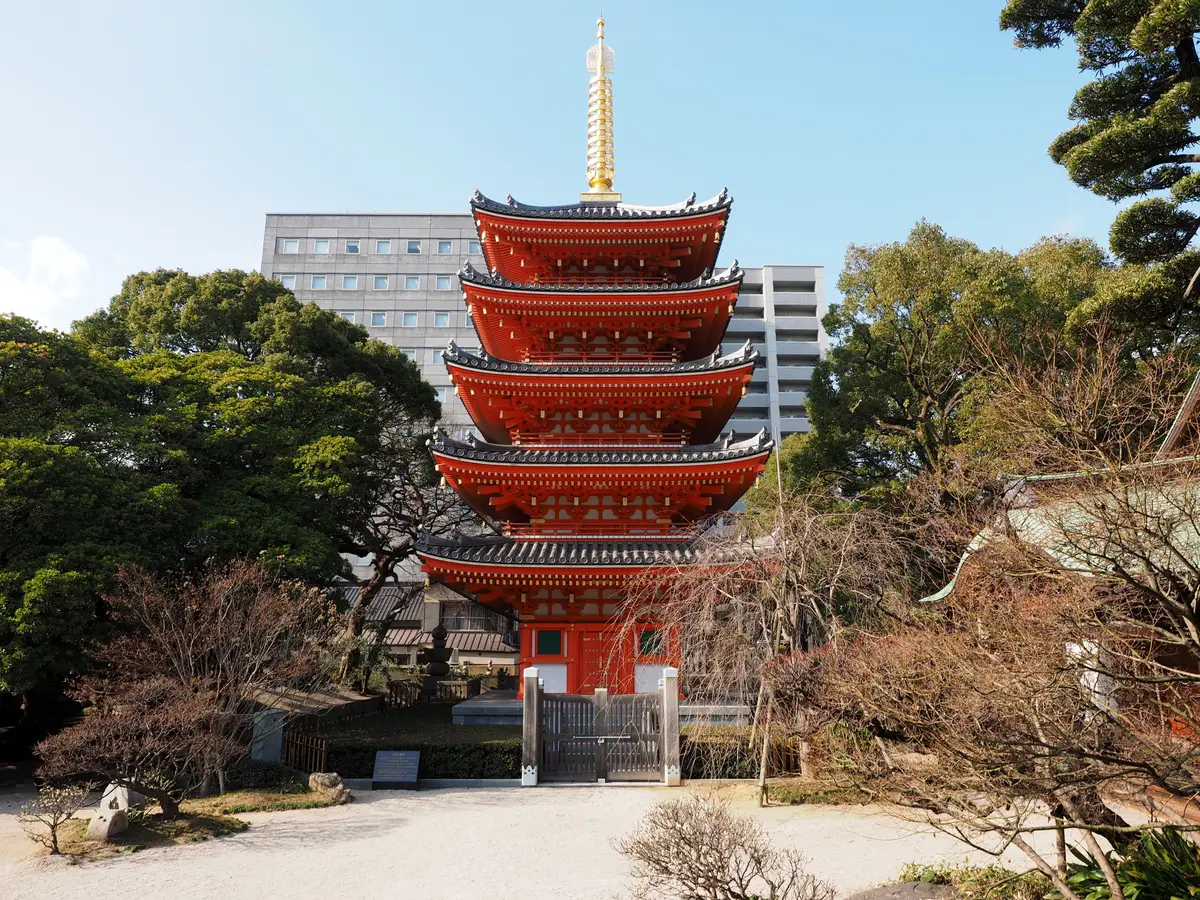 Tochoji Templeabout 2 km
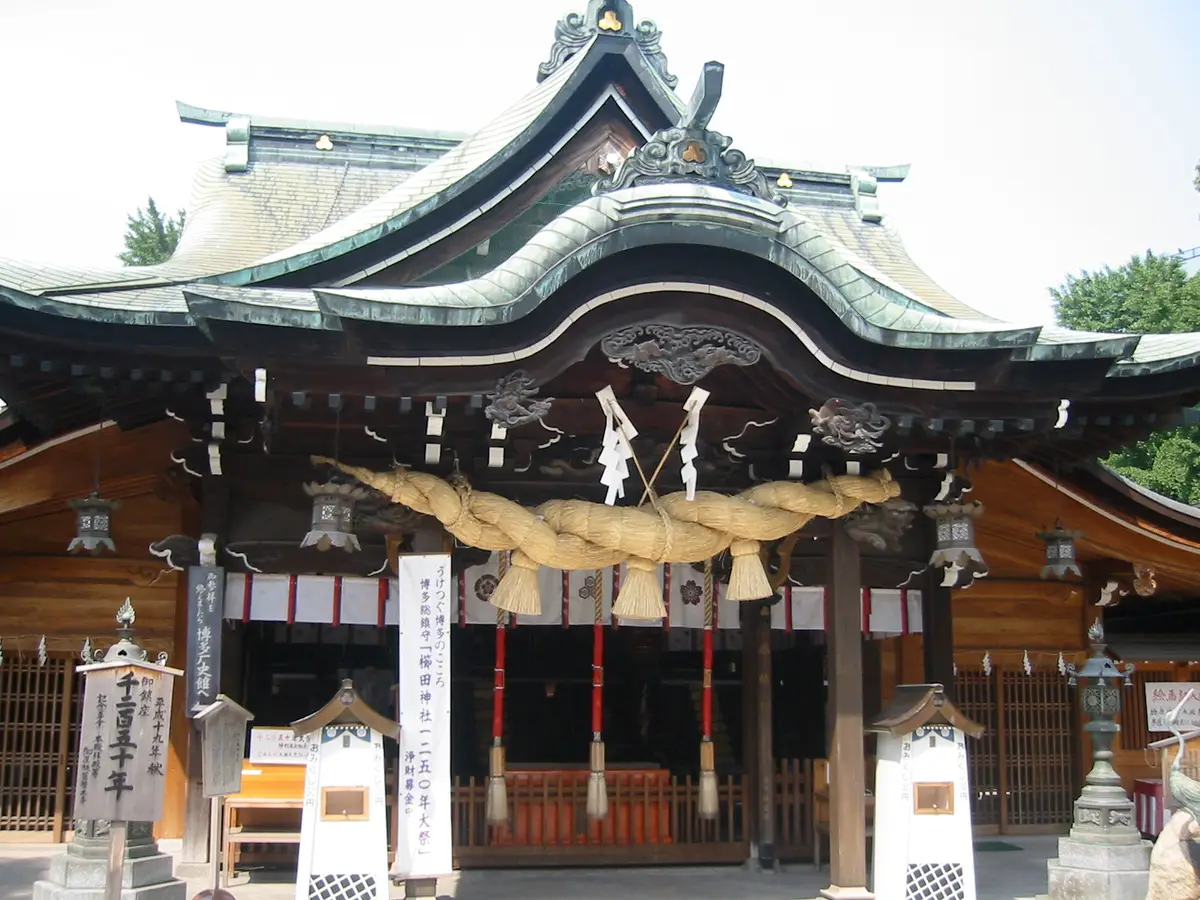 Kushida Shrineabout 3 km
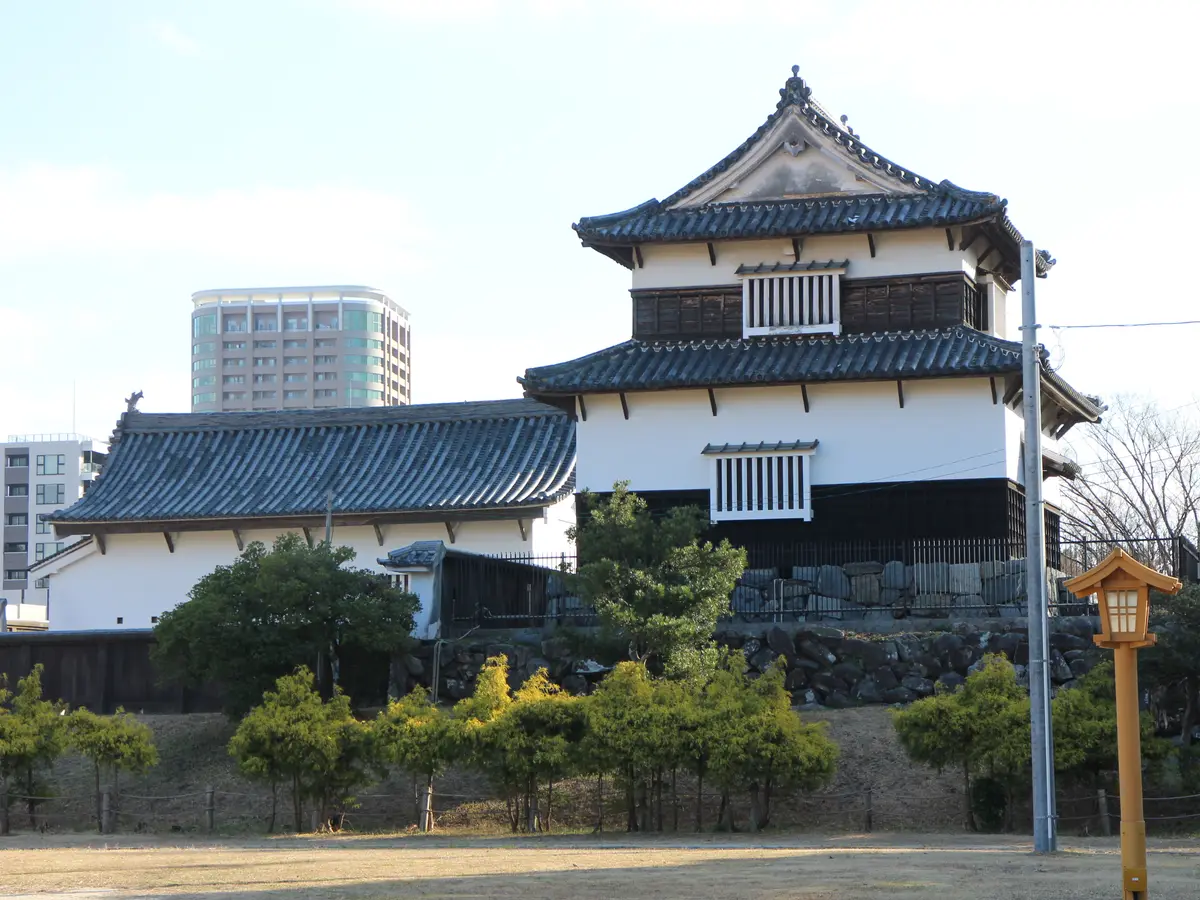 Fukuoka Castle Ruinsabout 5 km
Hakozaki Shrine: common questions
How long do you need at Hakozaki Shrine?
About 30 min
What are the opening hours of Hakozaki Shrine?
Hours change by season and by event. Check the official page on the day you go.
Is there an admission fee at Hakozaki Shrine?
The shrine grounds are open to walk into. Seasonal flower gardens on the site are ticketed; check on the day.
How far is Hakozaki Shrine from the Fukuoka (Hakata) cruise port?
It is about 2 km from the Fukuoka (Hakata) cruise port in a straight line. The road is longer, and the drive depends on traffic.
How much walking is there at Hakozaki Shrine?
A long, level approach on gravel; no climbing.
From people who went
Nobody has written here yet. If you go, leave a line — the next ship reads it.
This place has the writing but not the recording.